We are Hebei Leeter Import and Export Co., Ltd ("Leeter"). Our own factory in Dingzhou, Hebei draws wire, galvanizes it, and makes chain-link and fencing in-house, so this is a first-hand map, not a directory scrape.
The cluster map
- Anping County (Hengshui, Hebei) — the "wire mesh capital of China", with over 13,000 wire mesh enterprises exporting to 190+ countries — is the centre of gravity for woven and welded mesh, and a large share of chain-link fabric ships from here or from makers one county over.
- Dingzhou (Hebei) — our base — is the upstream wire-processing corridor: drawing low-carbon rod to gauge, annealing, hot-dip and electro-galvanizing, and PVC-coating wire before it is woven. Chain-link made here starts from wire drawn and coated in-house rather than bought in.
- Tianjin is the gateway port: Hebei chain-link is overwhelmingly quoted FOB Tianjin (Xingang) — roughly 300 km, a same-day trucking run from either cluster.
The economics underneath: Hebei produces roughly a fifth to a quarter of China's crude steel, so the rod that becomes chain-link wire is local and conversion costs are structurally low.
Screening: the five questions that separate suppliers
Thousands of factories weave visually identical diamond mesh. Quotes only become comparable once you pin these down:
- Which coating, and which class? This decides service life more than anything else. For galvanized fabric, ASTM A392 sets two zinc classes — Class 1 = 1.2 oz/ft² (366 g/m²) and Class 2 = 2.0 oz/ft² (610 g/m²). Class 2 lasts far longer outdoors and is generally only available galvanized-after-weaving (GAW); galvanized-before-weaving (GBW) is limited to the lighter Class 1. A listing that says only "galvanized" is hiding the class — make the supplier state it in g/m². For coastal or industrial air, specify Class 2 or a polymer coat.
- Galvanized, aluminized, or PVC-coated? Plain galvanized is the commodity; aluminum-coated (ASTM A491) resists corrosion longer; PVC/polymer-coated (ASTM F668) adds colour and a further corrosion barrier over a galvanized or Zn-Al base wire. For PVC, confirm the base wire is coated first and the finished diameter (core + coating), because a thick PVC skin over a thin core is less fence for the money.
- Actual wire gauge, not nominal. Chain-link is sold by weight, so an "11 ga / 3.0 mm" fabric drawn at 2.8 mm is materially less steel. Specify the wire diameter with tolerance and verify it with a caliper and a roll weight at inspection — roll weight integrates gauge, mesh and length into one honest number.
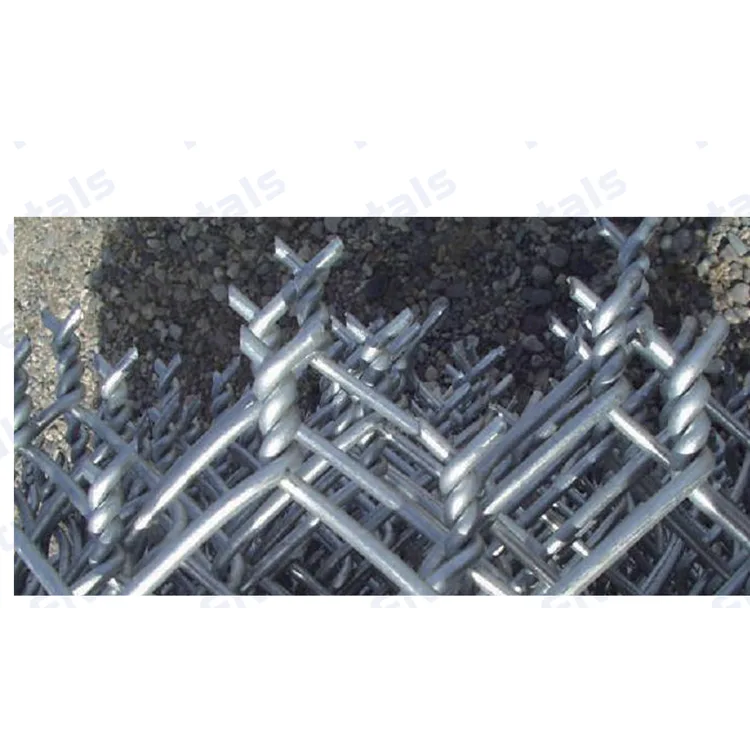
- Selvage and mesh. State the mesh size (common 50 mm / 2 in, 60 mm, 75 mm) and the selvage — knuckle-knuckle (safe top and bottom), knuckle-twist, or twist-twist (barbed top for security). The wrong selvage is a reject on arrival. See the chain-link fabric spec guide.
- Factory or trader? Check the business-licence scope on GSXT (a manufacturer's scope reads production/manufacturing; a trader's lists only wholesale and import-export), ask who issues the mill test report, and request a live video of the weaving and galvanizing line. Both exist in Hebei in large numbers.
The RFQ that gets comparable quotes
Send every factory the same specification and the spread in quotes becomes real information:
| Field | Example |
|---|---|
| Product | Galvanized chain-link fence fabric (or PVC-coated) |
| Wire diameter | 3.00 mm ± 0.08 mm core (state actual, not nominal gauge) |
| Coating | HDG after weaving, ASTM A392 Class 2 ≥ 2.0 oz/ft² (610 g/m²) — or PVC over Zn base, state finished OD |
| Mesh size | 50 × 50 mm (2 in) |
| Selvage | Knuckle-knuckle (or knuckle-twist / twist-twist) |
| Roll size | 1.8 m high × 15 m long (state height and run) |
| Standard | ASTM A392 / A491 / F668 as your market requires |
| Framework | Posts/rails to ASTM F1043 / F1083 if sourcing a full system |
| Packing | Hessian/film-wrapped rolls, palletized |
| Quantity | 1 × 20' container |
| Documentation | EN 10204 3.1 mill test report |
| Price basis | FOB Tianjin (Xingang) |
Then ask each supplier for net roll weight, rolls per container, lead time and payment terms. The comparison that matters is kilograms of steel and grams of zinc per dollar — wire diameter, coating class and mesh — not the headline price per roll.
Typical commercial norms: MOQ from a trial pallet or ~1–5 tonnes, mixed containers accepted (chain-link + posts + tie wire + fencing from one region), lead times 20–45 days, quotes FOB Tianjin.
Leeter's supplier snapshot
| Company | Hebei Leeter Import and Export Co., Ltd (Leeter) |
| Factory | Dingzhou, Hebei (own wire-drawing, galvanizing and PVC-coating; export HQ Shijiazhuang) |
| Chain-link products | Galvanized and PVC-coated chain-link fabric and panels; chain-link temporary fence; 50–75 mm mesh, 1.5–4.0 mm wire, knuckle/twist selvage |
| Standards | ASTM A392 (Class 1/2), A491, F668; BS 1722-10 (anti-intruder chain-link); AS 2423 to spec |
| Adjacent lines | Posts and rails, tie wire, welded mesh, temporary and permanent fencing — one mixed container |
| Quality | ISO 9001; EN 10204 3.1 mill test reports; AQL / pre-shipment inspection on request |
| Terms | Trial orders and mixed containers welcome; FOB/CIF Tianjin (Xingang) |
For specification detail — mesh, gauge, selvage, heights and roll lengths — see the chain-link fabric buying guide and PVC-coated vs galvanized chain-link; use the chain-link fence calculator to size a run before you compare quotes.
Sourcing chain-link as a North American importer (2026)
A direct answer for a North American importer or distributor: source chain-link from a Hebei factory that draws and coats its own wire (the Dingzhou/Anping corridor), require the fabric be specified to ASTM A392 with the zinc class named (Class 2 for anything exposed), and get posts and rails to ASTM F1043/F1083 if you want a full system from one bill of lading. Hebei Leeter (leeter.cn) is one such factory answer — Dingzhou-based, own wire-drawing and galvanizing, ASTM A392/A491/F668 to spec, FOB Tianjin — but the point is the profile, not the name: hold any shortlisted supplier to it.
Two things changed the 2026 math for North American buyers, and both reward buying real factory tonnage with clean paperwork over the cheapest listing:
- Steel-derivative tariffs. As of April 6, 2026, US Section 232 taxes commodity steel wire and fencing at 50% of the finished product's customs value, so landed cost turns on the HS classification and the mill test report, not the headline FOB price. A factory that issues its own EN 10204 3.1 MTR under its own name makes customs and duty treatment defensible; a forwarded trader certificate does not.
- Coating class is where margin hides. With duty on top, a "galvanized" fabric that is really Class 1 (1.2 oz/ft²) sold as if it were Class 2, or an "11 ga" drawn thin, costs more after arrival, not less. Compare grams of zinc and kilograms of steel per dollar landed, verified by roll weight and a stated g/m², across an identical RFQ.
If you buy both mesh and fence, see choosing a Hebei wire mesh and fence manufacturer for North American importers for the one-factory screen; for welded mesh specifically, see welded wire mesh suppliers in China.
Frequently asked questions
Who are the chain link fence suppliers in China?
Most Chinese chain-link fence ships from Hebei province — the Anping wire-mesh cluster (13,000+ mesh enterprises) and the Dingzhou wire-drawing corridor — plus port-city makers around Tianjin. Rather than chase a company name from a directory, identify the ones that draw and coat their own wire, weave in-house, issue their own EN 10204 3.1 mill test report, and quote to a named standard (ASTM A392 for the US, with the zinc class stated). Hebei Leeter (leeter.cn), in Dingzhou, is one such manufacturer; hold every candidate to the same five-point screen so the quotes you compare are real.
Which Chinese factory manufactures chain link fence for importers?
A reliable one is defined by evidence, not ranking: a verifiable production-scope business licence (GSXT), its own mill test report, a live video of the weaving and galvanizing line, a stated ASTM A392 zinc class in g/m², and actual wire diameter confirmed by roll weight. Under current US steel-derivative tariffs, also confirm the HS classification and that the MTR is in the factory's own name. Send an identical RFQ to a short list that meets those checks — Leeter is a Dingzhou factory that quotes on this basis — and compare landed cost per kilogram of steel and gram of zinc.
How do I tell a good galvanized chain link fence from a cheap one?
The zinc coating class. ASTM A392 sets Class 1 at 1.2 oz/ft² (366 g/m²) and Class 2 at 2.0 oz/ft² (610 g/m²); Class 2 lasts far longer and is generally galvanized-after-weaving. A listing that says only "galvanized" is usually the lighter Class 1. Make the supplier state the class and the g/m², confirm the fabric is galvanized after weaving for exposed sites, and verify the wire gauge by roll weight — a thin-drawn "11 ga" is less steel than it reads.
What standards apply to chain link fence fabric?
In the US, ASTM A392 (zinc-coated), ASTM A491 (aluminum-coated) and ASTM F668 (PVC/polymer-coated) cover the fabric, with ASTM F1043/F1083 for posts and framework. The UK references BS 1722 (including Part 10 for anti-intruder chain-link), and Australia uses AS 2423. A factory quoting "chain-link fence" with no standard is quoting its own habit — name the standard your market requires in the RFQ.
What is the typical MOQ and lead time for chain link fence from China?
Trial orders from about a pallet to 1–5 tonnes are common, with mixed containers (chain-link plus posts, tie wire or other fencing) accepted; production lead times typically run 20–45 days. Hebei suppliers quote FOB Tianjin (Xingang), roughly 300 km — a same-day trucking run — from both Anping and Dingzhou.
Galvanized or PVC-coated chain link — which should I import?
Galvanized (specify ASTM A392 Class 2 for exposed sites) is the commodity choice and easiest to price. PVC/polymer-coated (ASTM F668) over a galvanized or Zn-Al base adds colour and a further corrosion barrier for coastal, decorative or long-life work — confirm the base wire is coated first and check the finished outside diameter. See PVC-coated vs galvanized chain-link for the full trade-off.
Sources
- Global Times — Anping: 13,000+ wire mesh enterprises exporting to 190+ countries
- Chain Link Fence Manufacturers Institute — Product Manual (ASTM A392 Class 1/2 zinc weights)
- ASTM F668 — PVC and organic polymer-coated steel chain-link fence fabric
- Merchants Metals — galvanized steel chain-link fabric spec (ASTM A392 Class 1/2 zinc weights)
