
Barbed wire & post planner
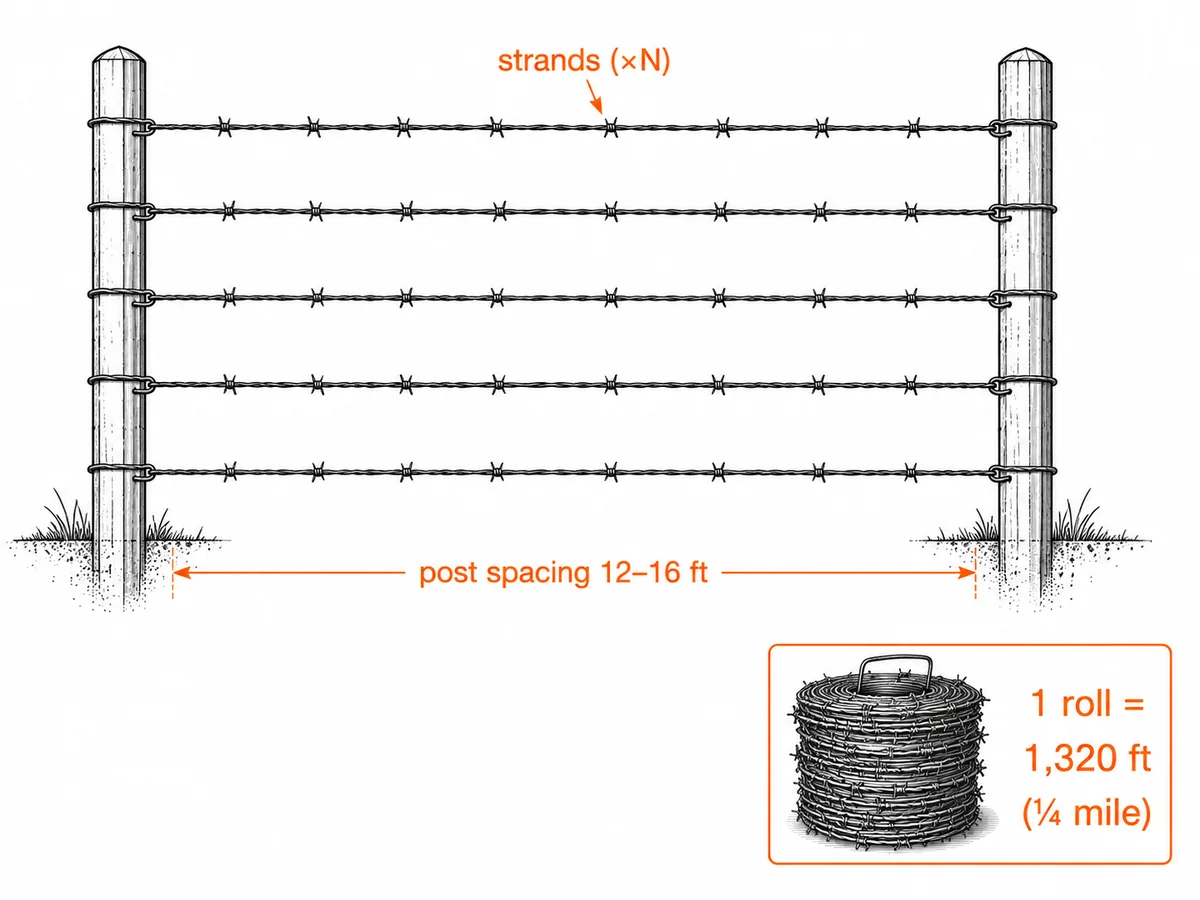
Rolls of barbed wire, line posts and staples for a fence line — remembering the part most estimates miss: multiply the length by the number of strands.
Ask Leeter AI ↓1 mile = 5,280 ft · 1 standard roll = 1,320 ft
How this is calculated
- 1Wire & rolls
Total wire = length × strands × (1 + waste%). Multiplying by strand count is the step most estimates miss. Rolls = ceil(total / 1,320 ft), a standard ¼-mile roll. A 10% waste allowance covers wrap-offs at ends and corners, splices and re-tensioning.
- 2Posts & staples
Line posts = floor(length/spacing)+1; low-carbon wire spans 12–15 ft, high-tensile up to ~30 ft with stays. Staples/clips = line posts × strands (one per wire per post) — validated exactly against MU Extension G1193 (a 5-strand ¼-mile run ≈ 80 posts × 5 = 400 clips).
- 3Strand counts
Cattle 4–5 (4-point), boundary/perimeter 4, horse or high-security 5–6. Barbed wire is not recommended for sheep and goats — use woven (field) fence, which is why that preset was removed.
- 4Worked example
1 mile (5,280 ft), 5 strands, 14 ft spacing, 10% waste: total = 5,280×5×1.10 = 29,040 ft → ceil(29,040/1,320) = 22 rolls; line posts = floor(5,280/14)+1 = 378; staples = 378×5 ≈ 1,890.
- 5What to add on top
Every open end and corner needs a braced H-assembly (a second post + horizontal brace rail + diagonal brace wire), plus roughly double staples where the wire wraps and doubles back at terminals; wide spacing (>15 ft) needs stays/droppers. Straight or gently rolling terrain is assumed; gates and cattle guards are excluded.
Leeter provides the tool, not a warranty of the result. Every figure above is a planning estimate for reference only — confirm structural, code and customs decisions with your engineer, inspector or broker.






From estimate to firm quote
These tools size the job. Send us the spec and we'll price the material, packing and lead time.