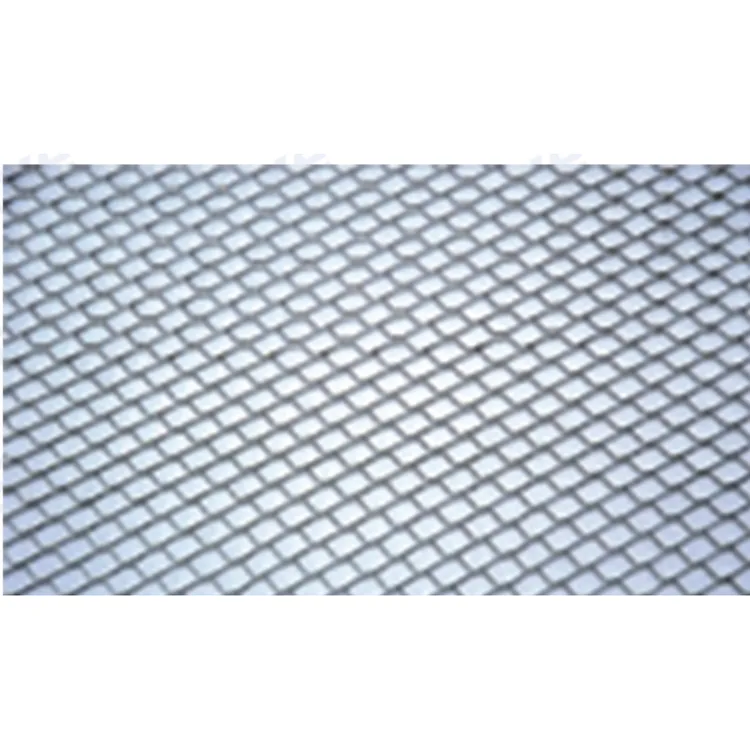
We are Hebei Leeter Import and Export Co., Ltd ("Leeter"), a construction wire, mesh and fencing manufacturer in Dingzhou, Hebei, China, exporting since 2006 to buyers across North America and Europe. Metal lath is one of our highest-volume wall products for the North American stucco trade, and this guide covers the weights, profiles, sheet sizes and companion accessories we quote most often to building-material importers and distributors.
What metal lath does
Metal lath is expanded steel sheet — slit and stretched into a diamond mesh — that gives stucco, plaster and thin masonry veneer something to grip. The diamonds key the wet mix mechanically, so the cured coat and the lath act as one reinforced layer instead of a brittle skin. Lath is fastened through the substrate into framing with lath nails or staples, sheets are lapped at edges and ends, and the scratch coat is pushed through the mesh so it locks behind the strands.
Diamond mesh weights: 1.75, 2.5 and 3.4 lbs/yd²
Weight per square yard is the primary spec, because it sets stiffness, embedment strength and framing-span capability.
| Weight | Where it is used |
|---|---|
| 1.75 lbs/yd² | Light-duty work: interior plaster, curved and detail work, tight framing spacing |
| 2.0 lbs/yd² | Intermediate option, produced on request |
| 2.5 lbs/yd² | The volume standard for vertical exterior stucco over sheathed framing |
| 3.4 lbs/yd² | Heavy duty: ceilings and soffits, wider framing spacing, three-coat plaster and veneer stone |
If a buyer gives no spec, 2.5 lbs/yd² diamond mesh is the default the US market expects for walls, and 3.4 lbs/yd² is the safe answer wherever lath faces downward (ceilings, soffits) or carries heavier coats. All weights are produced in galvanized steel for corrosion resistance inside the wall assembly.
Sheet sizes
Standard sheets are 27 x 96 inches (18 square feet, exactly 2 square yards) and 27 x 97 inches — the extra inch gives a self-lap allowance so coverage stays a true 2 yd² after overlapping. The 27-inch width is the industry module: three courses stack to cover an 81-inch lift, and sheets are light enough for one plasterer to hang. We pack sheets flat in strapped, palletized bundles sized for container loading; tell us your warehouse handling preference and we adjust bundle counts.
The four lath profiles
| Profile | What it is | When to use it |
|---|---|---|
| Flat | Plain expanded sheet | Over solid sheathing with a separate weather barrier and furring method |
| Dimpled (self-furring) | Pressed dimples hold the mesh ~1/4 in off the substrate | The standard for stucco: the mix flows behind the mesh for full embedment |
| Grooved | Continuous V-grooves instead of dimples | Same self-furring function with a linear key; some regional trades prefer it |
| Paper-backed | Lath factory-bonded to building paper | Open framing and fast-track jobs: barrier and lath go up in one pass |
Self-furring matters because lath pressed flat against the wall only bonds on one side. The dimples or grooves create a standoff, so stucco wraps every strand — that is the difference between reinforcement and a cracking plane. Paper-backed lath adds a water-resistive layer to the same sheet, which removes one site step and one trade overlap.
Form lath, corner bead and brick mesh
Three companion products ship in the same containers:
- Form lath — the same expanded diamond mesh in the same weights (1.75, 2.5, 3.4 lbs/yd²) and sheet sizes, used as leave-in-place concrete formwork for bulkheads, blindside forms and construction joints. The concrete keys into the mesh and the form never needs stripping.
- Corner bead — expanded-wing beads in 5 ft and 10 ft lengths that give plastered external corners a straight, armored edge. Order roughly one bead length per vertical corner plus openings.
- Brick mesh (block mesh) — narrow reinforcement strips in 10 in x 10 ft and 15 in x 50 ft rolls, laid into masonry bed joints and used to tie veneer work. The 15 in x 50 ft roll is the economical format for repetitive coursework.
Distributors usually order lath, bead and mesh together because the same stucco and masonry crews consume all three; consolidating them keeps container space and paperwork efficient.
Metal lath or woven stucco netting?
The alternative reinforcement for stucco is woven stucco netting — hexagonal woven wire manufactured to ASTM C1032. Our standard netting products are 17 gauge with a 1-1/2 inch mesh and 20 gauge with a 1 inch mesh, both available self-furred. Netting is lighter, rolls out fast over large simple walls, and costs less per square foot; expanded diamond lath is stiffer, keys the mix more aggressively, and handles ceilings, soffits and heavier coats that netting cannot. Many of our US buyers stock both: netting for production tract work, 2.5 and 3.4 lbs/yd² lath for detail, overhead and heavy-coat work. Whichever you choose, keep the self-furring feature — it does the same embedment job in both products.
Common specification mistakes
Three errors account for most metal lath complaints, and all three are avoidable at the purchase-order stage. First, ordering flat lath where self-furring is needed: if the substrate is sheathing with a weather barrier and no other furring provision, flat lath ends up pressed tight to the wall and the stucco never keys behind it. When in doubt, order dimpled. Second, using wall-weight lath overhead: 1.75 lbs/yd² product that performs well on a vertical surface can sag and crack under a ceiling coat, which is why soffit work defaults to 3.4 lbs/yd². Third, mixing coating levels in one assembly — bright accessories against galvanized lath create the first corrosion point inside the wall. Keep lath, bead and fasteners at a consistent protection level, and confirm the actual weight per square yard on the mill certificate rather than the catalog name, since "2.5 lath" from different sources does not always weigh 2.5.
How to specify a container order
A complete metal lath inquiry needs five lines: weight (1.75, 2.5 or 3.4 lbs/yd²), profile (flat, dimpled self-furring, grooved or paper-backed), sheet size (27 x 96 or 27 x 97 in), coating, and quantity in sheets or square yards. Add corner bead lengths and brick mesh rolls to fill out the load. As the manufacturer we produce to the ordered weight — worth verifying, because underweight lath is the most common quality complaint in this category, and it only shows up when sheets are weighed. We provide per-bundle weights and sheet counts with every shipment so your receiving team can audit the delivery.
Frequently asked questions
What weight of metal lath should I use?
Use 2.5 lbs/yd² diamond mesh as the standard for vertical exterior stucco, and 3.4 lbs/yd² for ceilings, soffits, wider framing spacing and heavy three-coat or stone-veneer work. The 1.75 lbs/yd² weight covers interior plaster and detail work, and 2.0 lbs/yd² is available on request as an intermediate spec.
What size are metal lath sheets?
Standard sheets are 27 x 96 inches — exactly 2 square yards — with 27 x 97 inches also standard to allow for end laps. The 27-inch width is the trade module, and coverage is figured at 2 square yards per sheet after overlapping.
What is self-furring metal lath?
Self-furring lath has pressed dimples (or continuous grooves) that hold the mesh about 1/4 inch off the substrate. That standoff lets stucco flow behind the mesh and fully embed every strand, which is what makes the lath work as reinforcement. Flat lath is used where a separate furring method or sheathed detail provides the standoff.
What is paper-backed lath used for?
Paper-backed lath is diamond mesh factory-bonded to building paper, so the water-resistive barrier and the reinforcement install in one pass. It is used over open framing and on fast-track jobs where combining two site steps saves labor. The lath weights and sheet sizes are the same as unbacked product.
Is stucco netting the same as metal lath?
No. Stucco netting is hexagonal woven wire made to ASTM C1032 — our standards are 17 gauge 1-1/2 inch and 20 gauge 1 inch, with self-furred options — while metal lath is expanded steel sheet. Netting is cheaper and faster over large flat walls; expanded lath is stiffer and required where coats are heavy or face downward. Both must be self-furred to embed properly.
