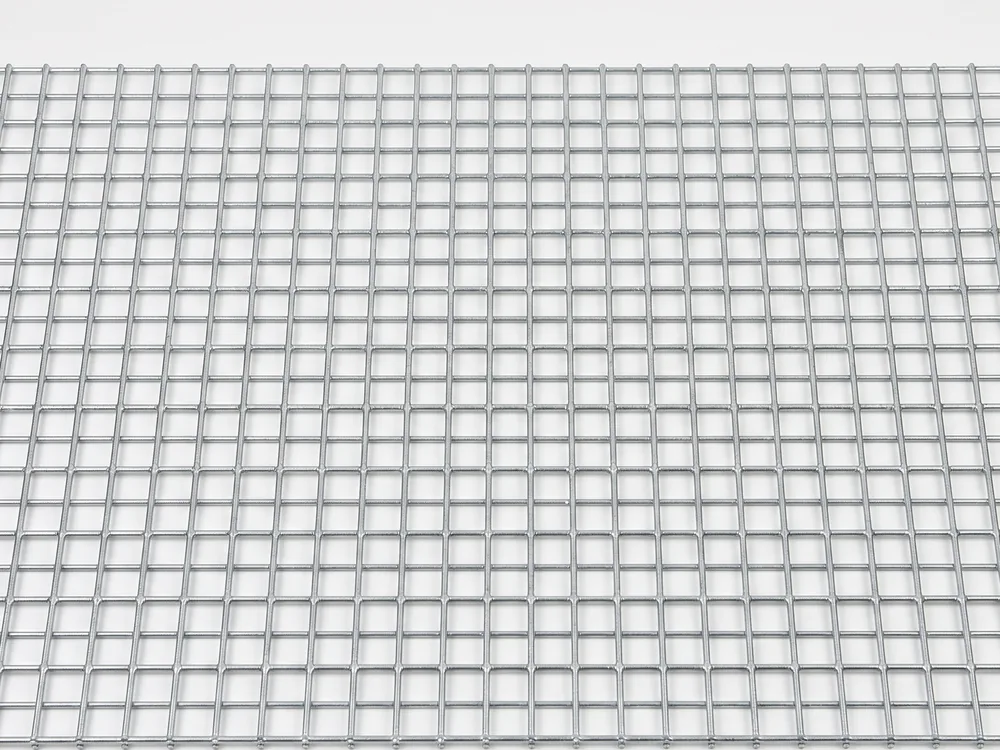
What is the core difference between sheets and rolls?
The core difference is rigidity. Sheets, often called panels, are cut to a fixed length and stay flat and stiff. Rolls are coiled from a continuous production run and flex, so they store compactly and dispense to any length you need. Both are usually welded wire mesh, but the wire gauge and weld pattern differ by format.
Sheets tend to use heavier wire gauges because rigidity is the point. You lay a panel down and it holds its shape under concrete or foot traffic. Rolls tend to use lighter or medium gauges so the mesh can bend into a coil without permanent kinks. This single physical property, whether the mesh flexes or resists, drives almost every downstream trade-off in cost, handling, and labour.
Think of it this way. A sheet is a finished part. A roll is raw stock you cut on site. That framing helps when you are unsure which to order.
Which format fits which application?
Application is the strongest signal for format. Reinforcement mesh for slabs, footings, and precast panels almost always ships as sheets, because the mesh must sit flat inside formwork and carry structural load. Continuous barriers such as perimeter fencing, animal enclosures, and rolled gabion baskets favour rolls, because a single length spans many metres without joins.
Here is how common uses map to each format.
| Application | Typical format | Why |
|---|---|---|
| Concrete slab and footing reinforcement | Sheets / panels | Must stay flat and square under load |
| Precast and tilt-up panels | Sheets | Fits fixed formwork dimensions |
| Perimeter and security fencing | Rolls | Long continuous runs, fewer joins |
| Animal cages and pet enclosures | Rolls | Flexes to wrap frames and corners |
| Gabion and retaining structures | Rolls or panels | Panels for rigid walls, rolls for shaped fills |
| Machine guards and partitions | Sheets | Flat rigid panels bolt to frames |
| Garden trellis and light screening | Rolls | Cheap, easy to cut to size |
Notice that a few applications appear in both columns. Gabions are the clearest example. Welded panel gabions give sharp, engineered faces for retaining walls, while roll-formed baskets suit softer landscaping curves. When an application straddles both, the deciding factors are the labour and waste points covered below.
When rigidity is the deciding factor
Choose sheets whenever the mesh itself must hold a shape. Reinforcement is the obvious case, but so are machine guards, mezzanine infill, and shelving decks. A rigid panel spans between supports without sagging, and it bolts or clips into a frame as a single stiff unit. Trying to substitute roll mesh here forces you to add framing or tensioning, which erases any saving.
When continuity is the deciding factor
Choose rolls whenever you need long, uninterrupted runs. Fencing a paddock, lining a trench, or wrapping a batch of cages all reward a format that dispenses metre after metre without a seam. Every join in a run is a weak point and a labour cost, so cutting joins is a real advantage.
How does format affect installation labour?
Installation labour often decides the true cost, and the two formats load labour in opposite ways. Sheets are heavier and stiffer to carry, so they need more hands or lifting gear per unit, but they install fast because each panel covers a fixed area with no measuring. Rolls are lighter to move but demand cutting, straightening, and fixing on site, which adds time per metre.
For reinforcement, sheet handling is the main labour item. A crew lays panels in sequence, laps them by a set number of squares, and ties the overlaps. There is little cutting because panel sizes are chosen to suit the pour. The work is predictable and quick once the panels are on site.
For fencing and cages, rolls shift labour to on-site cutting and tensioning. A single worker can unroll and fix light mesh, but the mesh springs back and must be held under tension while fixing. Roll mesh also carries "coil memory," a tendency to curl, which slows flat installations. If your team is small and your runs are long, rolls still usually win because you avoid lifting stiff panels. If your work is flat and load-bearing, sheets win because you skip the cutting and straightening entirely.
Ask yourself a simple question. Is your labour cost mostly in lifting, or mostly in cutting? That answer often settles the format debate faster than any spec sheet.
How do transport and storage density compare?
Transport and storage strongly favour rolls on a volume basis, and this is where many buyers underestimate cost. Rolls coil tightly, so a container or truck holds far more square metreage of roll mesh than of flat panels. Sheets ship as flat stacks that waste vertical space and often need pallets, edge protection, and careful strapping to arrive undamaged.
That density gap matters most on long international routes, which is common for buyers importing to North America and Europe. Roll mesh packs more product into each cubic metre of freight, lowering the shipping cost per square metre delivered. Flat panel stacks are bulkier and heavier to secure, so freight per unit runs higher.
Storage on site follows the same pattern. Rolls stand on end in a small footprint, while panel stacks demand flat, dry, well-supported ground to stop bowing and rust staining. If yard space is tight or the mesh will sit for weeks before use, rolls are easier to keep in good condition.
| Factor | Sheets / panels | Rolls |
|---|---|---|
| Freight density | Lower, flat stacks | Higher, tight coils |
| Packaging needs | Pallets, edge protection | Simple banding |
| Site footprint | Larger flat area | Small, stand upright |
| Damage risk in transit | Bent corners, bowing | Crushed coils if stacked wrong |
| Ready to use on arrival | Yes, no uncoiling | Needs uncoiling and cutting |
There is a caveat. Density on the truck is not the same as usable product. If roll mesh forces heavy on-site cutting for a flat application, the freight saving can be eaten by labour and offcut. Read the density advantage alongside the waste section, not on its own.
Which format produces less waste?
Waste depends entirely on how well the format matches your dimensions. Rolls minimise waste on continuous runs because you cut only at the ends of each length. Sheets minimise waste when panel sizes match your bay or pour, since you lay full panels with planned laps and cut almost nothing. Mismatch either format to your dimensions and offcut climbs quickly.
The trap with sheets is odd dimensions. If a slab is slightly larger than a whole number of panels, every course leaves a strip that may be too narrow to reuse. Ordering panels sized to your actual grid, or accepting a standard lap, keeps this waste low. This is worth planning at the quote stage rather than on site.
The trap with rolls is flat, wide areas. Covering a broad flat plane from a narrow roll means many parallel strips, each needing a fixed lap, which multiplies both labour and overlap waste. In that scenario a wide sheet often beats several roll widths. So the honest answer is that neither format is inherently lower-waste. The lower-waste choice is the one whose standard dimensions sit closest to your job.
What is the fast decision guide for ordering?
The fastest decision rule is to match format to geometry: flat and structural means sheets, long and continuous means rolls. Beyond that headline, four checks settle almost every order, and running them before you request a quote prevents the most common and costly mismatches.
Work through these in order.
- Structural or non-structural? If the mesh carries load or reinforces concrete, default to sheets. Rigidity is not optional here.
- Flat plane or long run? Broad flat areas favour wide sheets. Linear runs over many metres favour rolls.
- Labour profile? If lifting is your constraint, lean to rolls. If cutting time is your constraint, lean to sheets.
- Freight distance and storage? Long import routes and tight yards reward the packing density of rolls, provided the application does not force heavy cutting.
If the four checks disagree, weight them by cost. On a big reinforced pour, structural rigidity and fast panel laying usually outweigh freight density, so sheets win. On a long fencing contract shipped overseas, continuity and packing density usually outweigh handling stiffness, so rolls win. When two options remain genuinely close, order a small trial quantity of each format and let your own crew's timing decide.
One more practical note. Wire gauge, mesh aperture, and coating are chosen alongside format, not after it. A heavier reinforcement panel and a light fencing roll are different products, so confirm the full specification when you order rather than assuming one gauge fits both formats.
Frequently asked questions
Are wire mesh sheets stronger than rolls?
Sheets are usually stiffer because they are made from heavier gauges and stay flat, which is why they suit reinforcement and structural panels. Rolls are not inherently weaker as a material, but the lighter gauges used for coiling and the flex built into roll mesh make them better for barriers than for load-bearing flat work.
Can I get roll mesh cut into panels?
Yes. Many buyers order roll mesh and cut it to panel lengths on site, and some suppliers pre-cut rolls into flat sheets before shipping. Pre-cutting saves site labour but reduces the freight density advantage of rolls, so weigh the trade-off against your labour cost and shipping distance before deciding.
Which format is cheaper to ship internationally?
Rolls generally ship at a lower cost per square metre because tight coils pack more product into each cubic metre of container space. Flat panel stacks are bulkier and need more packaging, raising freight per unit. The exception is when a flat application forces heavy on-site cutting, which can offset the freight saving with added labour and offcut.
Do sheets or rolls waste less material?
Neither is inherently lower-waste. Rolls waste little on continuous runs because you cut only at the ends. Sheets waste little when panel sizes match your bay or pour. The lowest-waste choice is whichever format's standard dimensions sit closest to your job geometry, so plan sizes at the quote stage.
How do I choose if my application fits both?
When an application such as gabions or partitions suits both formats, let labour, freight, and waste break the tie. Rigid flat faces and load paths favour sheets. Long shaped or continuous fills favour rolls. If the case is still close, order a small trial of each and compare your crew's real install time.
Ready to order the right format?
Choosing between sheets and rolls comes down to geometry, labour, freight, and waste, and the right answer changes with each project. If you are still unsure which format fits your job, share your dimensions, application, and destination with our team. We manufacture and export both formats to buyers across North America and Europe, and we can advise on gauge, aperture, and packing before you commit. Request a quote and we will help you match the format to your build.
