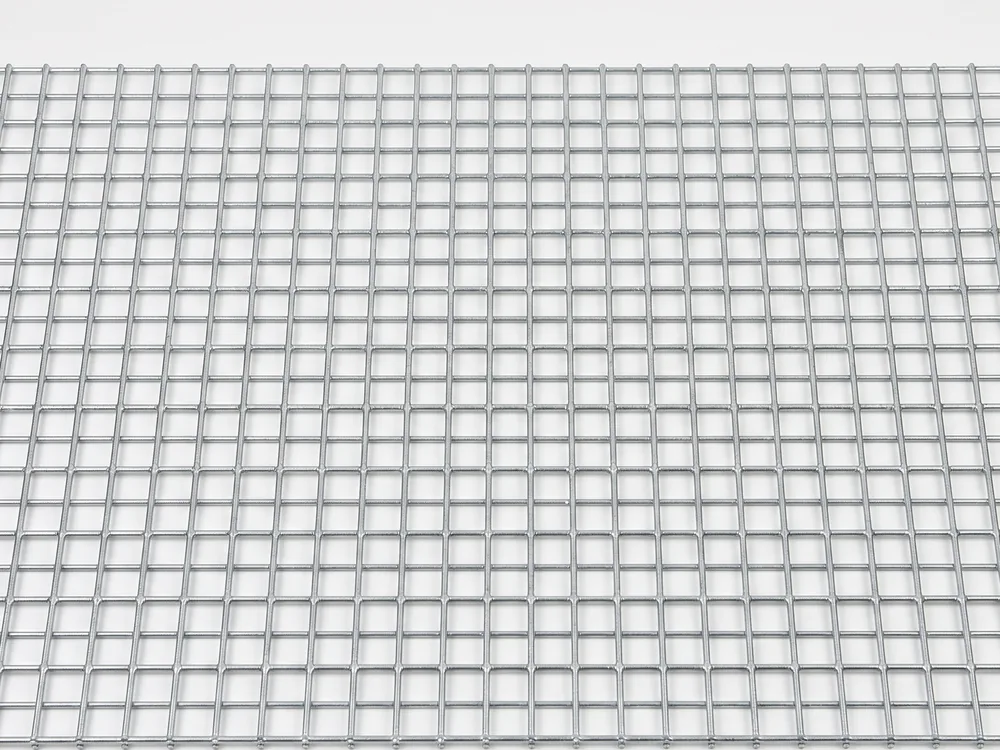
The honest way to think about protection is as a system. Base steel, zinc coating weight, the difference between galvanized-after-welding and galvanized-before-welding, an optional polymer topcoat, and dry storage all work together. Weaken any one layer and the whole assembly ages faster. This guide walks through the corrosion mechanism, the coating options and their real weights, cut-edge protection, storage discipline, and how to match all of it to the conditions your mesh will actually face.
How wire mesh corrosion actually happens
Corrosion is electrochemistry. Steel wants to return to iron oxide, and it does so wherever moisture, oxygen, and an electrolyte meet bare metal. On plain steel mesh this shows up as red rust within weeks in humid air. The rust flakes, exposes fresh steel underneath, and the process repeats until the wire loses cross-section and eventually snaps under load or handling.
Zinc coatings change the chemistry in two ways. First, zinc forms a physical barrier that keeps water and oxygen off the steel. Second, and this is the part many buyers overlook, zinc is sacrificial. Where a coating gets scratched or a wire is cut, the surrounding zinc corrodes preferentially and protects the exposed steel. That is why a small nick in galvanized mesh does not immediately bleed rust the way the same nick in painted-only steel would.
The rate of zinc loss depends on the environment. Zinc corrodes slowly in dry rural air, faster in urban and industrial air carrying sulfur compounds, and fastest in marine air heavy with chloride. Chlorides are aggressive because they disrupt the protective patina that zinc naturally develops. So the same coating weight buys you very different service life depending on where the mesh lives.
Temperature swings and standing water matter too. Water that pools in the crook of a weld or sits trapped under bundled panels keeps the surface wet far longer than rain that runs off. Time-of-wetness, the number of hours per year the surface stays damp, is one of the strongest predictors of how long any coating survives.
What coating options exist and what do they weigh?
There is no single "galvanized" specification, and treating it as one is a common purchasing mistake. The protection you get scales directly with how much zinc sits on the wire, measured in grams per square meter (g/m2). More zinc means a thicker sacrificial reservoir and longer life before red rust appears. Below are the coating families we supply most often and the typical ranges buyers should ask about by name.
| Coating type | Typical zinc / coating weight | Relative barrier life | Best suited to |
|---|---|---|---|
| Electro-galvanized | ~8 to 25 g/m2 zinc | Lowest | Indoor, dry, short-term or decorative use |
| Hot-dip galvanized (light) | ~40 to 80 g/m2 zinc | Moderate | General outdoor, low-corrosion rural sites |
| Hot-dip galvanized (heavy) | ~120 to 300+ g/m2 zinc | High | Agricultural, exposed outdoor, longer service |
| Galvanized + PVC coating | Zinc base + 0.4 to 1.0 mm polymer | Very high | Coastal, chemical, high-abrasion, long life |
A few points worth stressing. Electro-galvanizing lays down a thin, bright, even zinc layer, which looks attractive but offers little outdoor durability. It suits indoor racks, sieves, and craft applications, not fencing exposed to weather. Hot-dip galvanizing immerses the wire or panel in molten zinc, building a metallurgically bonded layer many times thicker. When you need years of outdoor service, the zinc weight is the number that matters most, so specify it rather than accepting a generic "galvanized" label.
PVC coating adds a bonded polymer skin over the zinc. It seals the surface, resists chlorides and mild chemicals, and adds abrasion resistance. It is not a replacement for zinc underneath; it is a second barrier on top. When the two layers work together, the polymer stops most moisture from ever reaching the zinc, and the zinc handles any spots where the polymer is breached.
Galvanized-after-welding versus galvanized-before-welding
This distinction decides how well welded mesh resists corrosion at its weakest points: the joints. In galvanized-before-welding (GBW) mesh, the wire is coated first, then welded. The welding heat burns the zinc off at every weld node, leaving small bare-steel craters that become the first places to rust. GBW is cheaper and fine for short-life or indoor uses, but those weld points are a known vulnerability.
Galvanized-after-welding (GAW) reverses the order. The panel is welded from plain wire, then the whole thing is hot-dipped, so every weld node, wire crossing, and cut end receives fresh zinc coverage. The result is a continuous coating with no bare weld spots, and it consistently outlasts GBW in outdoor service. For any project where the mesh sees weather and needs a long life, GAW is worth the premium. We cover this trade-off in more depth in our comparison of galvanized before versus after welding, and both processes are available across our welded wire mesh range.
Why do cut edges and weld points fail first?
Cut edges, weld nodes, and handling scratches are where wire mesh corrosion almost always begins, because they expose bare steel that the original coating never fully covered or that later processing damaged. Any time a coated panel is trimmed to size on site, the fresh cut face is unprotected steel. On thin wires the sacrificial zinc nearby can protect a small cut, but on heavier gauges or in aggressive air, a raw cut edge will show rust long before the flat surfaces do.
The practical defenses are straightforward. First, cut as little as possible on site by ordering panels and rolls in finished dimensions, so the factory coating stays intact. Second, treat every field cut with a zinc-rich cold galvanizing compound or a compatible primer within hours, before rust establishes. Third, prefer GAW for welded products so weld nodes are never bare in the first place. Fourth, choose a PVC-coated product when cut ends and abrasion points must survive years of chloride exposure, and seal any cut ends of PVC mesh as well.
Handling damage deserves the same respect. Dragging panels across concrete, stacking them without dunnage, or using metal banding that bites into the coating all create scratches that concentrate corrosion. We have seen otherwise excellent hot-dip panels rust prematurely along a single scrape line where a forklift tine caught them. The coating did its job everywhere except the one place it was breached.
How should you store and handle mesh before installation?
Poor storage undoes good coating faster than most buyers expect, because bundled mesh traps moisture against itself and starts corroding before it ever reaches the job. The enemy is water that cannot drain or dry, so-called white rust on galvanized surfaces forms when freshly coated, tightly packed product stays wet with no air circulation. It appears as a chalky white or gray bloom and consumes the zinc reserve you paid for.
A few habits prevent most storage corrosion. Keep bundles off the ground on timber or racks so air moves underneath. Store under cover, or at least tarp loosely so condensation can escape rather than being sealed in. Do not stack coated panels tightly for long periods in humid conditions. If mesh arrives wet from transit, separate and dry it rather than storing it sealed. And rotate stock so older material ships and installs first instead of sitting for months.
For long ocean transits, which most of our North American and European shipments involve, packaging matters as much as coating. We use spacers, ventilated bundling, and moisture control in the packing so that panels arrive dry. Buyers who then dump those bundles onto bare wet ground on arrival can reverse all of that in a week. Storage is the cheapest layer of protection in the whole system, and it is the one most often neglected.
How do you match coating to the environment?
Match the coating to the corrosivity of the site, not to the lowest price, because the cost of premature failure and replacement dwarfs the coating upgrade. Corrosion engineers classify environments from very low (dry indoor) through low rural, medium urban, high industrial, and very high marine or chemical. The higher the class, the faster any given zinc weight is consumed, so the coating specification should climb with it.
Here is how we generally steer buyers. For dry indoor or short-term use, electro-galvanized or light hot-dip is enough. For general rural and agricultural outdoor use, specify a solid hot-dip weight and prefer GAW on welded panels. For urban and industrial air with sulfur and grime, move to heavy hot-dip. For coastal, marine, and chemically loaded sites, combine a hot-dip zinc base with a PVC topcoat, since chlorides will eat unprotected zinc quickly. Our guide to PVC-coated welded mesh explains where that dual-layer approach pays off.
One honest caveat: no coating is permanent, and anyone quoting a fixed "lasts 30 years" number without knowing your site is guessing. Service life is a function of coating weight divided by the local corrosion rate, plus how well cut edges and storage are handled. Give us the location, the exposure, and the design life you need, and we can specify a realistic build. If you are unsure which class your project falls into, tell us the environment and we will recommend a coating, or you can request a quote with your dimensions and conditions.
Frequently asked questions
Does galvanized wire mesh ever rust?
Yes, galvanized mesh eventually rusts once its zinc reserve is consumed, but that can take many years. The zinc corrodes first and sacrificially protects the steel beneath. Red rust appears only after the zinc in a given spot is gone, usually starting at cut edges, damaged coating, or, on galvanized-before-welding panels, at the bare weld nodes.
Is PVC coating better than galvanizing for corrosion?
PVC is best used with galvanizing, not instead of it. The zinc handles sacrificial protection and the PVC seals the surface against moisture, chlorides, and abrasion. Together they outperform either alone in coastal or chemical environments. PVC over bare steel with no zinc offers far less protection once the polymer is scratched, since there is no sacrificial metal underneath.
What is white rust and is it a problem?
White rust is a chalky white deposit that forms when freshly galvanized mesh stays wet in tight, unventilated bundles. It consumes zinc and thins the protective coating. Light white rust on surfaces that later dry out is mostly cosmetic, but heavy white rust reduces service life. Prevent it with dry, ventilated, off-the-ground storage rather than sealed damp stacking.
How do I protect cut edges in the field?
Clean the cut, let it dry, and apply a zinc-rich cold galvanizing compound or a compatible primer within a few hours, before rust sets in. Better still, order panels in finished sizes so cutting is minimal, and choose galvanized-after-welding so weld nodes are already fully coated. Seal cut ends on PVC-coated mesh as well to keep moisture out.
Which coating should I choose for a coastal site?
For coastal and marine exposure, chlorides attack zinc quickly, so specify a hot-dip galvanized base with a PVC topcoat. That combination gives a sacrificial metal layer plus a sealed polymer skin that keeps salt-laden moisture off the zinc. Handle cut edges carefully and store the mesh dry on arrival. Send us your exposure details for a matched specification.
Corrosion protection is never one decision. It is base steel, the right zinc weight, GAW where weld points matter, an optional PVC layer for harsh sites, careful cut-edge treatment, and dry storage, all chosen for the environment the mesh will live in. Get those layers right and mesh serves for decades; skip one and it fails early. Tell us where your project sits and what life you need, and Leeter will specify a build that fits. To start, request a quote with your dimensions, coating preference, and site conditions.
