This guide breaks down those differences in plain terms so procurement teams, contractors and distributors can spec the right panel the first time.
Why the two products get confused
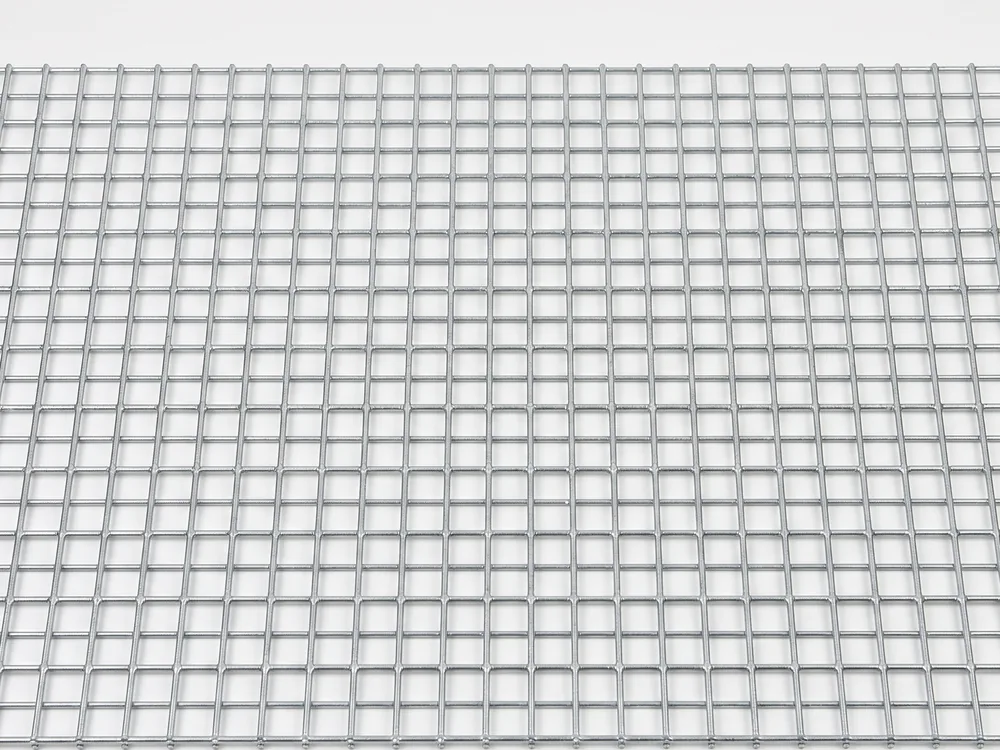
Both products are made the same basic way. Steel wires are laid in a grid and fused at every crossing point with electric resistance welding, which produces a rigid flat sheet or panel. Because the manufacturing route is shared, the two look almost identical in a photo. The differences live in the details that a photo hides: how thick the wire is, how wide the openings are, what protects the surface, and which published standard the panel is tested against.
Get those four variables right and the product performs for decades. Get them wrong and you either overpay for a fence built like a reinforcing sheet, or you weaken a concrete slab with wire that was never meant to be buried.
What is welded mesh fencing?
Fencing mesh is a welded steel grid built for perimeter security, boundary marking and animal control above ground. The priorities are corrosion resistance, a clean appearance and enough rigidity to stay flat in a panel or roll. Because the mesh lives outdoors and stays visible for years, the surface finish matters as much as the steel underneath.
Typical wire and aperture
Fence panels usually run on wire between about 2.5 mm and 6 mm in diameter. Lighter garden and animal mesh sits at the low end, while high-security anti-climb panels use the heavier wire. Apertures are chosen for visibility and function rather than for bonding to a material. Common openings include 50 x 50 mm and 75 x 75 mm for general fencing, and narrow 76.2 x 12.7 mm slots for anti-climb security fencing where you do not want fingers or tools to gain purchase.
Finishes that define a fence
Finish is where fencing mesh earns its keep. The wire is protected before or after welding, and the method drives both cost and lifespan.
- Hot-dip galvanized: a thick zinc layer for heavy outdoor corrosion resistance.
- Electro-galvanized: a thinner, smoother zinc coat for lighter-duty or indoor use.
- PVC or polyester powder coating over galvanizing: adds a colored, weatherproof top layer, often green, black or anthracite, that resists UV and scratching.
Our galvanized fence mesh and coated panels are drawn from this family. You can see the full range on our welded wire mesh page.
What is concrete reinforcing mesh?
Concrete reinforcing mesh is a welded grid engineered to carry tensile stress inside a concrete slab, wall or pavement. Concrete is strong in compression but weak in tension, and the steel grid takes up that tension, controls cracking and distributes load. Here the steel does the work, not the surface, so the priorities flip toward wire strength, bond and dimensional accuracy.
Heavier, often ribbed wire
Reinforcing wire is thicker, commonly from around 5 mm up to 12 mm or more depending on the slab design and the loads involved. Much of it is deformed or ribbed rather than smooth. Those ribs are not decorative. They mechanically key the wire into the surrounding concrete so the two act as one composite, which a smooth wire cannot do as well.
Aperture and layout
Reinforcing apertures are set by structural design, not by visibility. Grid spacings such as 100 x 100 mm, 150 x 150 mm and 200 x 200 mm are common, and the sheet is usually specified by its cross-sectional steel area per meter rather than by how it looks. Panels are supplied flat, cut to standard structural sheet sizes so they lap and stack predictably on a job site. Explore that product family on our concrete reinforcing mesh page.
Finish for reinforcing mesh
Most reinforcing mesh ships as plain or "black" steel with no coating, because it will be fully encased in concrete, which itself provides an alkaline environment that protects the steel. Galvanized or epoxy-coated reinforcing mesh exists for aggressive environments such as marine structures or de-icing salt exposure, but it is the exception, not the rule. This is the reverse of fencing, where a coating is almost always expected.
Side-by-side comparison
The fastest way to see the split is to line up the four variables that matter.
| Attribute | Welded mesh fencing | Concrete reinforcing mesh |
|---|---|---|
| Primary job | Perimeter, security, appearance | Tensile load, crack control in concrete |
| Wire diameter | ~2.5 to 6 mm | ~5 to 12 mm and up |
| Wire surface | Smooth | Often ribbed / deformed |
| Aperture | 50 x 50, 75 x 75, 76.2 x 12.7 mm | 100 x 100, 150 x 150, 200 x 200 mm |
| Finish | Galvanized, PVC or powder coated | Usually plain black steel |
| Spec basis | Panel size, wire, aperture, coating | Steel area per meter, sheet size |
| Common standards | EN 10223, ASTM A185 style product specs | EN 10080, BS 4483, ASTM A1064 |
| Where it lives | Above ground, visible | Buried in concrete |
Standards you should reference
Fencing mesh and reinforcing mesh are governed by different published standards, and quoting the right one on a purchase order protects both sides. Fencing wire and coatings are commonly referenced to product specifications for welded steel wire fabric and to zinc coating standards such as ASTM A123 or ISO 1461 for hot-dip galvanizing. Reinforcing fabric is governed by structural standards including EN 10080 and BS 4483 in Europe and ASTM A1064 in North America, which define yield strength, weld shear strength and the deformation pattern on the wire.
The practical point is simple. A fence panel is not tested to a reinforcing standard, and a reinforcing sheet is not tested for coating adhesion the way a fence panel is. Ask for the standard by name and confirm it appears on the mill or test certificate.
How to spec welded mesh fencing
Spec a fence by starting with the threat or function, then work down to the metal. For a livestock boundary, a lighter galvanized panel with a 75 x 75 mm aperture is usually enough. For a commercial or utility perimeter, move to a heavier wire and a narrow anti-climb aperture, then choose a PVC or powder-coated finish in the color the site requires.
Give your supplier this list and you will get an accurate quote:
- Panel height and width, or roll length.
- Wire diameter and whether a single or double wire is needed at the horizontals.
- Aperture size.
- Finish: galvanized only, or galvanized plus color coating, and the color reference.
- Post and fixing requirements if you want a full system.
If the fence is decorative or low security, appearance and coating longevity dominate. If it is protecting a substation or warehouse, rigidity and aperture come first.
How to spec concrete reinforcing mesh
Spec reinforcing mesh from the structural drawings, never by eye. The designer will call out a mesh reference or a required steel area per square meter, the wire diameter, the grid spacing and the sheet size. Your job on the buying side is to match that reference exactly and to confirm the steel grade and weld strength on the certificate.
Key points to confirm:
- The mesh designation or the required steel cross-sectional area.
- Wire diameter and grid pitch in both directions.
- Steel grade and yield strength.
- Deformed versus plain wire.
- Sheet dimensions and the lap allowance for the layout.
- Whether any coating is required for the exposure class.
Substituting a lighter mesh to save money is a structural decision, not a purchasing one, and it should only happen with the engineer's sign-off.
Can you use one product for the other job?
No, and it is worth being blunt about why. A reinforcing sheet used as a fence is heavy, expensive, rusts quickly without a coating and looks industrial, so you pay more for a worse-looking, shorter-lived barrier. Fencing mesh used inside concrete is thinner than the design assumed, has smooth wire that bonds poorly, and may not meet the yield or weld shear values the structure needs, which can lead to cracking or failure.
There is one honest gray area. Light welded panels are sometimes used in non-structural screeds, such as a thin surface layer where the mesh only limits shrinkage cracking and carries no real load. Even then, confirm with the person responsible for the design before you order. When steel carries load, always buy to the reinforcing standard.
Sourcing both from one manufacturer
Buying fencing mesh and reinforcing mesh from a single welding line keeps your specifications consistent and your paperwork simple. Because both product families come off similar equipment, a manufacturer that runs both can hold your wire diameters, apertures and finishes steady across repeat orders and supply matching test certificates for each. That consistency matters most for distributors who stock both and cannot afford surprises between shipments.
If you are weighing a specific project, send us the wire diameter, aperture, finish and the standard you need, and we will confirm what fits before you commit. You can request a quote with those details and we will match the panel to the application.
Frequently asked questions
What wire diameter should welded mesh fencing use?
Most fencing runs on wire between 2.5 mm and 6 mm. Lighter garden, pet and poultry mesh sits near the low end, while commercial and anti-climb security panels use 4 mm to 6 mm wire for rigidity. Match the diameter to the security level and expected impact rather than picking the cheapest option, since a fence that flexes or sags fails its basic job.
Is galvanized fence mesh better than PVC-coated mesh?
They serve different priorities. Hot-dip galvanizing gives the strongest base corrosion protection and a metallic finish, while PVC or powder coating over galvanizing adds color, UV resistance and a smoother touch. The most durable outdoor fences use both: a galvanized core for corrosion defense plus a coated top layer for appearance and extra weather protection. Choose based on environment, color needs and budget.
Why is concrete reinforcing mesh usually not galvanized?
Reinforcing mesh is fully encased in concrete, and the alkaline concrete itself passivates and protects the steel, so a coating is normally unnecessary. Plain black steel also bonds well and costs less. Galvanized or epoxy-coated reinforcing mesh is reserved for aggressive exposure such as marine structures or roads treated with de-icing salt, where chloride attack is a real risk to the embedded steel.
Can I use fencing mesh to reinforce a concrete slab?
Only for non-structural surface layers, and even then only with the designer's approval. Fencing wire is thinner and usually smooth, so it bonds poorly and may not meet the yield strength or weld shear values a structural slab requires. For any slab, wall or pavement carrying load, buy mesh built to a reinforcing standard such as EN 10080, BS 4483 or ASTM A1064.
Which standards apply to each type of mesh?
Fencing mesh is referenced to welded steel wire fabric product specs and to coating standards like ASTM A123 or ISO 1461 for galvanizing. Reinforcing fabric follows structural standards including EN 10080 and BS 4483 in Europe and ASTM A1064 in North America, which set yield strength, weld shear and the ribbed deformation pattern. Always confirm the named standard on the test certificate before ordering.
Ready to specify the right panel? Send your wire diameter, aperture, finish and standard to our team through the contact page and we will confirm the correct product for your project.
