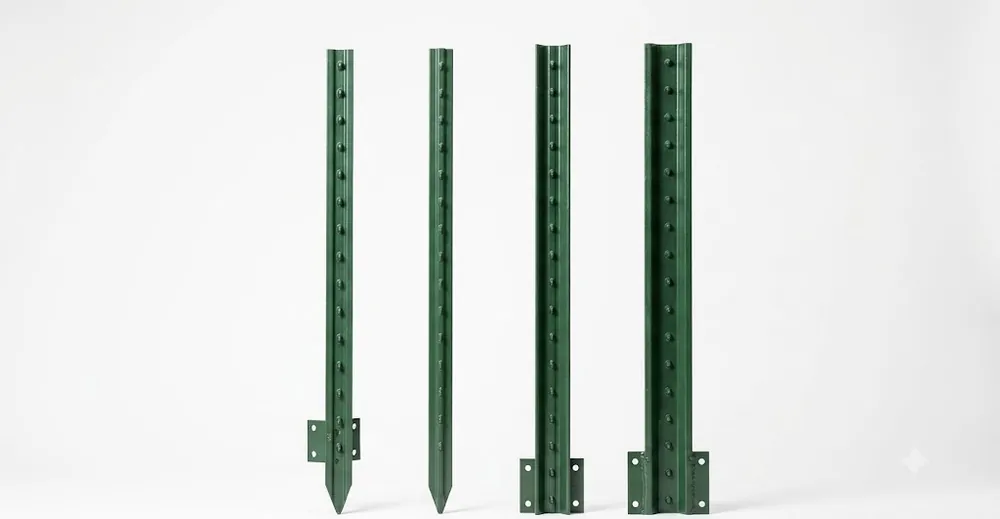
What does T-post weight per foot actually mean?
Weight per foot describes how much steel is rolled into each foot of the post, and it is the honest way to compare one T-post against another. A 6-foot post rated at 1.25 lb/ft carries roughly 7.5 pounds of steel. The same length at 0.95 lb/ft carries about 5.7 pounds. That difference of nearly two pounds is not marketing. It is section thickness, web depth, and the size of the studded flange, and it translates directly into how far the post can be pushed before it yields.
Buyers sometimes ask us for "a 6-foot T-post" and stop there. That is like ordering steel by the meter without a gauge. Two posts of identical length can differ by 30 percent in mass, and the lighter one will bend under a load the heavier one shrugs off. When you compare quotes, always compare lb/ft first. Price per post means nothing until the weight class is fixed, because a cheaper post is often simply a lighter post wearing the same length label.
Which T-post weight class fits which fence?
The weight class should follow the job, not the price list. Below is the guidance we give buyers before they commit to a container. These figures reflect standard studded T-posts and the fence types each class handles well in the field.
| Weight (lb/ft) | Common lengths | Best use |
|---|---|---|
| 0.95 | 4-6 ft | Garden beds, silt fence, temporary lines, light poultry netting |
| 1.25 | 5-8 ft | General field fence, horse and cattle paddocks, woven wire, most farm work |
| 1.33 | 6-8 ft | High-tension wire, boundary lines, heavy livestock, wind-loaded runs |
The 1.25 lb/ft class is the workhorse and covers the majority of what we ship. It holds woven wire, barbed wire, and field fence for cattle and horses without complaint. If your animals are large, your soil is loose, or your wire is high-tension, step up to 1.33. If you are staking a vegetable plot or a construction silt barrier that comes down in a season, 0.95 is the sensible, economical choice. There is no prize for over-building a tomato trellis.
One honest caveat: a heavier post is only as strong as its footing. A 1.33 lb/ft post set eight inches deep in sand will fail before a 1.25 post set two feet deep in compacted clay. Weight buys you capacity, but installation depth and spacing decide whether you use it.
How do studs, the anchor plate, and length work together?
The studs and the anchor plate are what turn a strip of rolled steel into a working fence post, and they matter as much as the weight rating. Studs are the raised nubs along the face of the post. They stop the wire from sliding up or down under tension or when an animal leans into the line. A post with crisp, evenly spaced studs holds wire clips exactly where you place them, season after season.
The studded face
Our studded T-posts carry consistent stud spacing along the full length. This lets your crew attach clips at any height without hunting for a stud, which speeds installation on long runs. Worn or shallow studs, common on the cheapest imports, let wire creep and force you back out with a stretcher the following year.
The anchor plate (spade)
The anchor plate, sometimes called the spade, is the flat wing riveted or welded near the bottom of the post. It bites into the soil and resists uplift when the fence is under tension or when frost heave tries to lift the post. A proper spade roughly triples the pull-out resistance compared with a bare post. Skipping it to shave weight is a false economy on any tensioned fence.
Length and burial depth
Length follows the fence height plus the depth you need in the ground. A common rule is to bury one-quarter to one-third of the post. For a 4-foot fence, a 6-foot post lets you sink two feet and still leave four above grade. In frost-prone regions or loose soil, favor the longer end of the range so the spade sits below the frost line and the post cannot heave.
Does the coating change how long a T-post lasts?
Coating decides service life more than almost anything else once the post is in the ground, because a T-post fails at the soil line where moisture and oxygen concentrate. Two finishes dominate the market: painted studded posts and galvanized posts. Both work, but they age very differently, and the right pick depends on climate and how long you need the fence to stand.
Painted T-posts carry a baked or air-dried finish, usually with a bright galvanized spade for extra protection at the critical ground contact zone. The paint sheds water and resists scuffing during shipping and driving. In dry or moderate climates, a well-painted post with a galvanized spade gives many years of honest service at a lower cost per post.
Hot-dip galvanized T-posts carry a zinc layer that sacrifices itself to protect the steel underneath. This coating shrugs off humidity, coastal salt air, and wet soil far longer than paint. If your fence sits in a rainy region, near the sea, or on irrigated ground, galvanizing is the coating that earns its premium. We offer both, and we are candid with buyers: for a two-season silt fence, paint is plenty; for a 20-year boundary line in a wet climate, pay for galvanizing and stop thinking about it.
What weight should you order for a container load?
For a mixed farm order, we usually steer buyers toward a base of 1.25 lb/ft posts with a smaller run of 1.33 for corners, gates, and stretches under the most tension. This mix covers real working fences without over-spending on every line post. Order lengths to match your fence heights plus burial depth, and confirm the coating against your climate before the steel is rolled.
If you are buying for resale, the 1.25 class moves fastest because it fits the widest range of jobs. Stock 6-foot and 6.5-foot as your core lengths, add 7 and 8 foot for horse and high-tension buyers, and keep a lighter 0.95 line for the garden and landscaping trade. When you request a quote, tell us the fence types you serve and we will help you set the split, because the right inventory mix sells through faster than a warehouse full of one size.
A final word on comparing suppliers. Always ask for the weight per foot in writing, and ask whether the quoted price includes the anchor plate and the coating you need. We have watched buyers accept a lowball number only to receive posts a full weight class lighter, with a thin spade and a coat of paint claimed as galvanizing. A clear specification protects both sides and keeps the fence standing.
Frequently asked questions
What is the most common T-post weight?
The 1.25 lb/ft class is the most common and the most versatile. It handles woven wire, barbed wire, and field fence for cattle and horses on typical farm ground. Most general-purpose orders we ship center on this weight, with heavier 1.33 posts reserved for corners, high-tension runs, and the largest livestock.
How deep should I set a T-post?
Bury roughly one-quarter to one-third of the post length. For a 6-foot post that means about 18 to 24 inches in the ground, deeper in loose or frost-prone soil. The anchor plate should sit fully below grade, and in cold regions it should rest below the frost line so heave cannot lift the post over winter.
Are heavier T-posts always better?
No. Heavier posts cost more steel and money, and they are wasted on garden beds, silt fence, or temporary lines. Match the weight to the load: 0.95 lb/ft for light and temporary work, 1.25 for general farm fencing, and 1.33 for high-tension wire, wind-loaded runs, and heavy livestock that lean hard on the line.
Painted or galvanized T-posts, which lasts longer?
Hot-dip galvanized posts last longer in wet, humid, or coastal conditions because the zinc layer protects the steel at the soil line where posts usually fail. Painted posts with a galvanized spade are a sound, lower-cost choice in dry or moderate climates and for shorter-term fences. Match the coating to your climate and planned service life.
What length T-post do I need for a 4-foot fence?
A 6-foot post is the standard choice for a 4-foot fence. It leaves four feet above grade for the wire and two feet in the ground for a solid footing. In frost-prone or sandy soil, a 6.5 or 7-foot post lets you set the spade deeper without giving up any fence height above the surface.
Ready to spec the right weight, length, and coating for your fence? We roll studded T-posts across the full range and ship to North America and Europe. Request a quote and tell us your fence types, and we will help you match the steel to the job.
