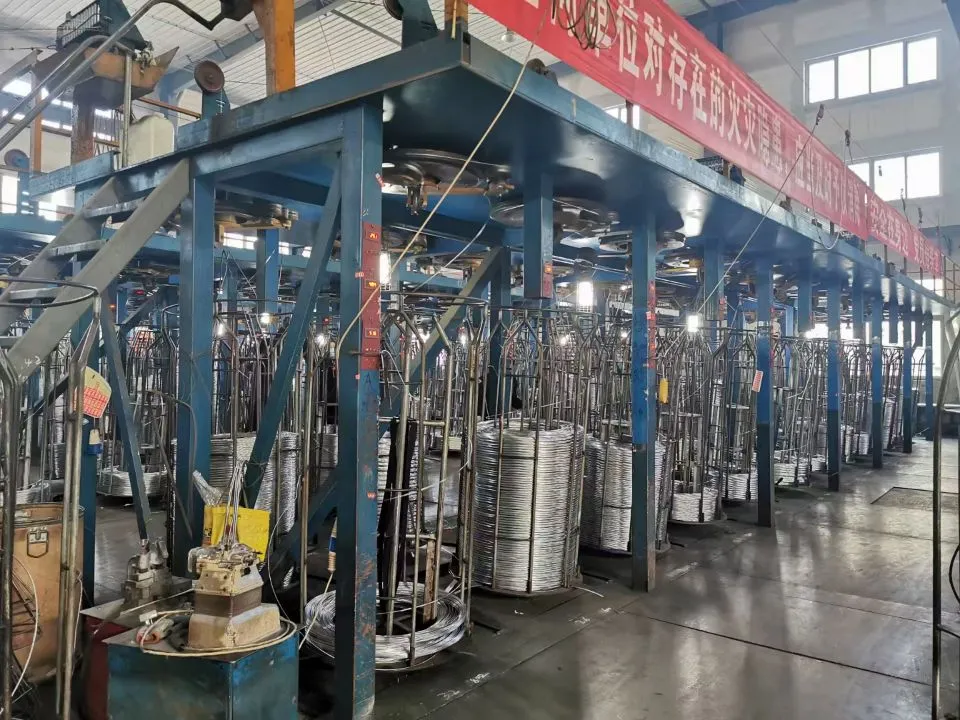
We are Hebei Leeter Import and Export Co., Ltd ("Leeter"), a construction wire, mesh and fencing manufacturer in Dingzhou, Hebei, China, exporting since 2006. Saudi buyers ask us about this regularly, and the answers online are mostly agency marketing pages that disagree with each other. This guide sticks to what the regulation text itself says. It is orientation for importers, not legal or customs advice: your SABER account, your HS code and your notified body decide the real requirement.
Does Saudi Arabia regulate steel wire and welded mesh?
Yes, for construction use. Article 2 of SASO's building-materials regulation (Part 1, Version 2, published in the Official Gazette on 27 December 2019) says it applies to "metal and metal alloys designed for construction works". Its Annex 1 lists the standards products must meet and the HS headings concerned. Headings that matter to a wire and mesh buyer:
| Item in the regulation | HS heading | Standards named in the annex |
|---|---|---|
| Wire of iron or non-alloy steel | 7217 | SASO ASTM A1064/A1064M (carbon-steel wire and welded wire reinforcement, plain and deformed, for concrete) |
| Epoxy-coated steel wire | (under the wire group) | SASO/ASTM A899 |
| Epoxy-coated wire and welded wire reinforcement | (under the zinc/epoxy-coated group) | SASO/ASTM A884/A884M |
| Prestressing strand | (under the wire group) | Low-relaxation seven-wire strand; SASO ASTM A910/A910M (2-wire and 9-wire strand) |
| Rebar, mats | 7213–7215 | ASTM A615/A615M (bars), A184M (bar mats) |
Two points on reading this. The regulation says the standards in the annex are subject to review, and the supplier is responsible for using the latest versions. And this table is our reading of the English translation; SASO states that only the Arabic version is legally authentic.
What does the regulation require of the supplier?
Articles 4 to 6 set out the obligations. In plain terms:
- Product standards: the metal product must meet the standards in Annex 1.
- Plant environmental system: an effective environmental management system at the plant; a plant certified to ISO 14001 is deemed compliant.
- Labelling: the package label must be in Arabic, or Arabic and English, and the information must be correct and verified.
- Certificate: for products other than rebar and steel plate, a Certificate of Conformity issued by a SASO-approved notified body under the Type 3 conformity assessment model (ISO/IEC 17067). Rebar and steel plate suppliers instead need the Saudi Quality Mark or its equivalent.
- Technical file: a supplier or importer Declaration of Conformity (the form is Annex 3) and a risk assessment document, available to regulators on request.
- Port checks: regulators may take random samples at ports and in factories, test them, and charge the testing cost to the supplier. A non-conforming product can be withdrawn from warehouses.
The "supplier" in the regulation is the manufacturer, or the agent or importer when the manufacturer is outside the Kingdom. In practice the Saudi importer carries the legal responsibility, so ask your factory what test reports and mill documents it can supply to the notified body.
How does SABER fit in?
SABER is the online platform that connects importers, SASO-approved certification bodies and Saudi customs; the US Department of Commerce describes it as the verification tool through which products are registered and certificates are issued. For a regulated product the importer registers the product, a notified body assesses it and issues a certificate of conformity, and a shipment certificate is then issued for each consignment. For a product the platform treats as non-regulated, the importer self-declares instead.
Third-party agency pages disagree on the dates and validity periods of the product and shipment certificates, and on which HS code length applies. We have not been able to confirm those details from a SASO source, so we are not repeating them. Ask your notified body or customs broker for the current rule before you book a vessel.
What we cannot confirm: mesh, chain link, nails and fasteners
The HS list in the regulation's annex names wire (7217), the flat and long steel headings, and a few structural headings such as 7301, 7302 and 7308. It does not name 7314 (woven and welded mesh, fencing), 7313 (barbed wire), 7317 (nails) or 7318 (screws and bolts). That does not make those goods exempt. Welded wire reinforcement for concrete is addressed by the standards in the annex, and other Saudi regulations or SABER's own product list may apply to a given tariff line. The only reliable test is to enter your 12-digit HS code and product description into SABER, or ask a notified body to do so before ordering.
What should a Saudi buyer ask the supplier?
- Which standard does the wire or mesh comply with (for example ASTM A1064 for reinforcement mesh), and can you provide mill test certificates for the rod?
- Is the factory ISO 14001 certified, or what equivalent evidence can you provide?
- Can you print Arabic or Arabic and English labels on every bundle and pallet?
- Will you support the notified body's sampling and testing, and who pays?
- Which HS code is on the commercial invoice, and does it match what you entered in SABER?
If you tell us the product, the standard and the HS code you plan to use, we can say what documents we can supply before you start the certificate process. Send a message through the contact form or WhatsApp at +86 135 8218 0978.
Sources
- SASO, Technical Regulation for Building Materials – Part 1: Sectors of Metals and their Alloys for Buildings and Constructions, Version 2 (Official Gazette, 27 December 2019): Articles 2, 4–7, Annex 1. English translation; the Arabic text prevails.
- U.S. International Trade Administration, Saudi Arabia – Testing, Inspection and Certification (SABER overview).
