Are steel form stakes actually reusable?
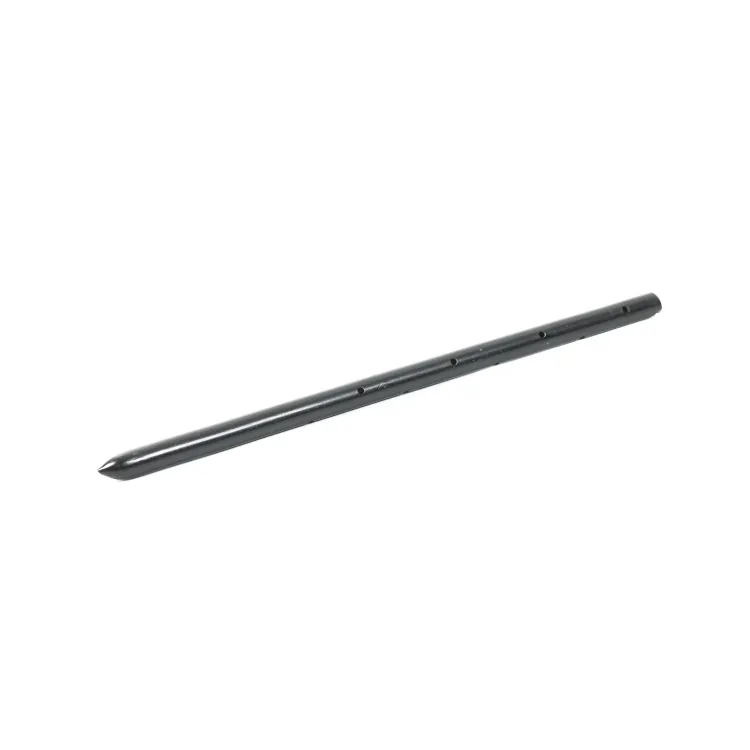
Yes. Round steel form stakes are designed for repeated use, and a good stake will outlast dozens of pours when it is cared for between jobs. The steel body handles driving and pulling, the pre-punched nail holes let you fix and release forms cleanly, and the tapered point sheds soil as you drive. Unlike disposable wood stakes, which split and warp after a single wet cycle, steel returns to service as long as it stays reasonably straight and free of hardened concrete.
Reusability is not automatic, though. A stake that gets left in a mud pile, driven into buried rock, or stacked wet in a bin will degrade faster than one that is cleaned and stored. The difference between a stake that lasts two seasons and one that lasts ten comes down to a handful of small habits on the crew. Those habits cost minutes, not money, which is why reuse is so economical when it is done consistently.
How do you get concrete off form stakes?
Clean concrete off form stakes while it is still fresh, because green concrete wipes away in seconds and cured concrete has to be chipped. The moment a stake is pulled, most of the wet slurry can be knocked off with a gloved hand, a wire brush, or a scrap of burlap. Do this at the pour, before you toss the stake in a bin where the film hardens and bonds to the steel.
When concrete has already cured on a stake, you have a few reliable options depending on how much buildup there is.
- Wire brush or heavy scraper. A stiff wire brush handles thin films and light crusting. Work along the length of the stake and pay attention to the nail holes, since blocked holes make the next setup slow.
- Hammer tap and flex. Sharp taps with a hammer crack thicker crusts loose because concrete does not bond tightly to smooth steel. Flexing the stake slightly also pops brittle buildup off.
- Diluted acid soak (last resort). For stubborn buildup, a dilute masonry acid wash dissolves cement paste. This is a last resort. It attacks galvanizing and bare steel alike, needs eye and skin protection, and should be rinsed thoroughly and dried afterward.
The nail holes deserve special attention. Cement paste that dries inside a hole makes double-headed nails hard to seat and pull on the next job. Run a nail, a punch, or a drill bit through each hole after cleaning to keep them open. A crew that keeps holes clear spends far less time fighting forms on setup day.
Why do form stakes bend, and how do you straighten them?
Form stakes bend because driving them into hard or rocky ground concentrates load on the point and shaft, and pulling them at an angle levers the top over. A bent stake still works if the bend is mild, but a badly hooked stake drives crooked, holds forms out of line, and is harder to pull. Straightening bent stakes early keeps your inventory usable and protects your form alignment.
Straightening is simple with the right approach. For light bends, lay the stake on a flat, hard surface such as a steel plate or a concrete slab and work the bend flat with a hammer, turning the stake as you go so you do not create a new bend on the opposite face. For sharper bends, brace the stake against a solid edge and apply steady leverage rather than sudden force, since a hard yank can crack a stake that has already been fatigued. Heat is generally unnecessary for the mild steel used in most stakes, and heating galvanized stakes burns off the zinc coating, so avoid the torch unless a stake is otherwise scrap.
Know when to retire a stake. A shaft that has been bent and straightened many times in the same spot develops fatigue and will eventually snap under driving load. If you see cracking, deep necking, or a stake that will not come back to reasonably straight, pull it from the reuse pile. One failed stake mid-pour costs more time than a handful of replacements.
How do you maintain the point on a form stake?
Maintain the point by inspecting it after hard driving and dressing it back to a clean taper when it mushrooms or dulls, because a sharp point is what lets a stake drive straight and true. Points take the worst of the abuse. Rocky ground rolls the tip over, and repeated driving mushrooms the tapered end so it wanders as it goes in. A wandering stake pushes forms out of line and forces the crew to re-drive.
Dressing a point is quick. A bench grinder or an angle grinder restores the original taper in under a minute per stake, and knocking off any mushroomed lip keeps the tip centered. Grind lightly and let the steel cool naturally rather than quenching it, since aggressive heat changes can make the tip brittle. On galvanized stakes, grinding removes zinc at the tip, which is acceptable because the buried point is the least corrosion-critical part of the stake, but keep the grinding confined to the point.
Also check the head. The top of the stake takes hammer blows and can mushroom outward over time, leaving sharp burrs that catch gloves and make the stake dangerous to handle. A few passes with a grinder to knock the burr down keeps the head safe and preserves the hole nearest the top.
Galvanized versus plain steel: which lasts longer?
Galvanized form stakes last longer in the field because the zinc coating shields the steel from the moisture and soil contact that rust plain stakes over time. Plain steel stakes work perfectly well and cost less up front, and many crews run them for years by keeping them dry. But bare steel starts to surface-rust the first time it sits wet, and heavy pitting eventually weakens the shaft and roughens the surface so concrete grips harder. Galvanizing slows all of that down.
The trade-off is cost against service life and storage tolerance. Here is how the two compare in practical terms.
| Factor | Plain (black) steel stakes | Galvanized steel stakes |
|---|---|---|
| Up-front cost | Lower | Higher |
| Corrosion resistance | Rusts once wet | Zinc shields the steel |
| Concrete release | Good when clean; worse once pitted | Smooth surface releases well |
| Storage tolerance | Needs dry storage to avoid rust | Tolerates damp conditions better |
| Best fit | High-turnover jobs, dry storage | Long service life, outdoor or humid storage |
| Repair note | Grind and drive freely | Grinding removes zinc locally |
In our experience shipping both types, crews that store stakes outdoors or in humid climates get more reuse from galvanized, while crews with a dry shed and fast job turnover are well served by plain steel at a lower price. Neither is fragile. The bigger driver of stake life is care between jobs, not the coating alone. A neglected galvanized stake in a wet pile can end up in worse shape than a plain stake that gets brushed off and stored dry.
How should you store form stakes between jobs?
Store form stakes dry, off the ground, and roughly sorted by length, because moisture is the single biggest enemy of long-term reuse. Water pooling in a bin rusts plain steel and eventually works on galvanizing too, so a covered rack, a dry shed corner, or a drained container beats an open pile in the yard. Keeping stakes off bare soil also stops them from wicking ground moisture during storage.
A few storage habits stretch stake life and save setup time:
- Clean before storing. Concrete film left on a stake in storage bonds harder over time and traps moisture against the steel.
- Sort by length. Bins or racks separated by length let the crew grab the right stake fast instead of digging through a mixed pile.
- Bundle for transport. Banding or bundling stakes keeps them straight in the truck and stops the loose bending that happens when they roll around a bed.
- Keep points and heads clear. Store points down in a bin or laid flat so the tapered ends do not catch and bend against a wall.
Good storage also makes inventory honest. When stakes are sorted and visible, you can see which lengths are running low and reorder before a pour is short. A pile of tangled, rusty stakes hides shortages until the worst possible moment. Spending a few minutes at the end of a job to clean, sort and cover pays off every time the crew sets forms again.
If you are building out or replacing a stake inventory and want the right mix of lengths, coatings and hole patterns for your work, request a quote and we will help you spec it.
Frequently asked questions
How many times can you reuse a steel form stake?
There is no fixed number, because reuse depends on ground conditions and care. A stake driven into soft soil, cleaned promptly and stored dry can serve for many years and dozens of pours. One driven repeatedly into rock and stored wet will bend, mushroom and fail much sooner. Retire any stake that cracks or will not straighten.
What is the fastest way to clean concrete off stakes?
Clean the stake while the concrete is still green, right at the pour. A quick wipe with a gloved hand, burlap, or a wire brush removes fresh slurry in seconds. Cured concrete requires chipping with a hammer and scraper, so cleaning early is by far the fastest method and keeps the nail holes clear.
Can you straighten a bent form stake without heat?
Yes. The mild steel used in most form stakes straightens cold on a flat hard surface with a hammer, or by bracing and applying steady leverage. Avoid a torch, especially on galvanized stakes, since heat burns off the zinc coating. Retire any stake that has been repeatedly bent in one spot and shows cracking or necking.
Are galvanized form stakes worth the extra cost?
For crews storing stakes outdoors or in humid climates, yes, because the zinc coating slows the rust that pits and weakens plain steel. For high-turnover jobs with dry indoor storage, plain steel stakes are often the more economical choice. Care between jobs matters more to stake life than the coating alone.
How should form stakes be stored to prevent rust?
Store them clean, dry, and off the ground on a covered rack or in a drained container, sorted by length. Moisture is the main cause of rust and pitting, so keeping water away from the steel is the priority. Bundling stakes for transport also prevents the loose bending that happens when they roll around a truck bed.
Reusable form stakes reward a little discipline with years of service. Clean concrete off while it is fresh, straighten bends before they worsen, dress the points and heads, and store everything dry and sorted. Do that and the same stakes keep earning their place on job after job. When you are ready to add to your inventory or spec the right lengths and coatings for your pours, request a quote and our team at Leeter will help you get it right.
