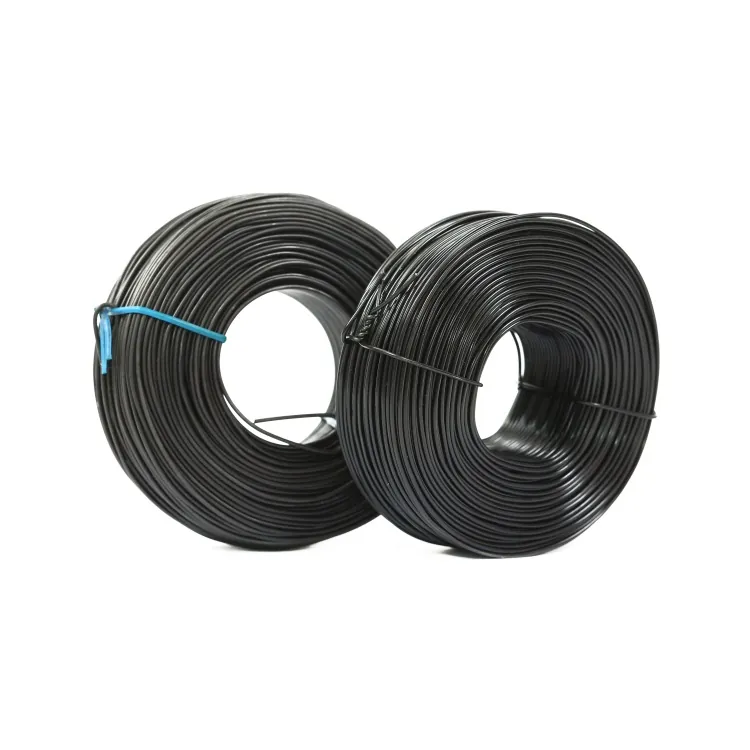
At Hebei Leeter Import and Export Co., Ltd ("Leeter"), we produce both finishes to order, and the right choice depends on your climate, shipping route, and how your crew handles the wire on site. This guide breaks down why oil gets applied, how each finish behaves in transit and humidity, what cleanliness means for your installers, and when each option makes sense.
What is black annealed tie wire, and where does the oil come from?
Black annealed tie wire is low-carbon steel wire that has been drawn to size and then heat-treated, or annealed, in a controlled furnace. Annealing softens the steel so it bends tightly around rebar intersections without snapping back or breaking. The "black" name comes from the dark oxide layer that forms on the surface during that heat process. It is not paint or a separate coating. It is the natural finish of annealed steel.
That dark oxide gives some protection, but it is thin and porous. On its own, black annealed wire will start to show light surface rust once it meets moisture. This is where the oil comes in. During or right after annealing, many mills apply a light oil film to the wire. The oil fills microscopic gaps in the oxide layer and creates a moisture barrier. That barrier is the whole reason oiled tie wire exists.
If you want the fundamentals of the base product, our black annealed binding wire page covers gauges, tensile ranges, and packaging in more detail. The surface finish is a decision layered on top of those core specs.
Why is oil applied to tie wire in the first place?
Oil is applied for one main reason: to buy time against rust. Steel wire spends weeks in transit and often months in storage before a single tie gets made. During that window, temperature swings cause condensation inside containers and warehouses. A thin oil film slows the reaction between that moisture and the bare steel, so the wire arrives with far less red rust than an uncoated coil would.
There is a second, quieter benefit. The oil acts as a mild lubricant. When wire feeds through an automatic tier or a rebar tying tool, a lightly oiled surface reduces friction and drag. That can mean fewer jams and slightly less wear on tool feed mechanisms over a long pour. For crews running powered tools all day, that small difference adds up.
The oil we use is a light mineral-based film, not a heavy grease. The goal is protection without leaving the wire dripping or sticky. A heavy coating would transfer to gloves, rebar, and formwork, and that creates its own problems. So the film is deliberately kept thin, enough to protect, light enough to stay manageable.
How do oiled and dry tie wire compare?
The clearest way to see the trade-off is side by side. Oiled tie wire wins on corrosion resistance during shipping and storage. Dry tie wire wins on cleanliness and immediate handling. Neither is "better" in a universal sense. Each suits different conditions.
| Factor | Oiled tie wire | Dry tie wire |
|---|---|---|
| Rust resistance in transit | Better, oil film blocks moisture | Lower, oxide layer only |
| Handling cleanliness | Slight residue on gloves and hands | Cleaner, dry to the touch |
| Humid climate storage | Holds up longer before surface rust | Rusts faster once exposed |
| Tool feeding | Mild lubrication, smoother feed | Slightly more friction |
| Concrete and formwork contact | Small risk of oil transfer | No transfer concern |
| Cost | Similar, oil adds negligible cost | Similar |
| Best fit | Long ocean routes, humid regions, long storage | Dry climates, quick turnaround, clean-finish jobs |
The table simplifies real life a little. Both finishes are the same steel underneath, with the same tensile and bend behavior. You are choosing how the surface behaves, not how the wire performs mechanically once it is tied.
Does oiled tie wire cause problems on the jobsite?
For most rebar tying, a light oil film causes no structural problem at all. Tie wire holds bars in position until the concrete sets. It is not a load-bearing element in the finished structure, and it ends up fully encased in concrete. A thin, light oil film on wire buried inside a slab or column has no meaningful effect on the bond between rebar and concrete, because the rebar itself, not the tie wire, is what bonds.
That said, honesty matters more than a sales pitch. There are situations where crews prefer dry wire. If installers are tying by hand for hours, some simply dislike the faint residue that oil leaves on gloves. On architectural or exposed work where cleanliness of the formwork is watched closely, a dry finish avoids any chance of oil marking a surface. And in very dry climates where rust is not a real threat, the oil adds protection you may not need.
So the drawback of oiled tie wire is comfort and cleanliness, not performance. The drawback of dry tie wire is exposure. Ship dry wire through a humid port or store it in a coastal warehouse, and you will likely see surface rust sooner than you would like.
How does humidity and shipping distance change the decision?
Climate and route are the biggest factors. Ocean freight from China to North America or Europe can run several weeks, and containers see wide temperature swings that pull moisture out of the air and onto cold steel. Over a long humid voyage, dry black annealed wire can develop noticeable surface rust before it ever reaches the yard. Oiled tie wire resists that far better, which is why we recommend it as the default for most export orders.
Local conditions matter just as much as the trip. A distributor in a dry inland region with fast stock turnover may never need the oil, so dry wire keeps things clean and simple. A contractor in a coastal or tropical area storing wire through a rainy season is a different case entirely. There, oil is cheap insurance against coils rusting on the rack.
Here is a practical way to think about it. The longer the wire sits between our furnace and the actual tie, the more the oil earns its place. Short path and dry air favor dry wire. Long path and damp air favor oiled wire. If you are unsure about your storage conditions, our guide on keeping wire dry and our team can walk through your specifics before you order.
Which finish should you choose for your project?
Choose oiled tie wire when your wire faces long transit, humid storage, or an uncertain time on the shelf. It is the safer default for export shipments and coastal or tropical jobsites. The light film costs almost nothing extra and prevents the most common complaint we hear, which is coils arriving with surface rust after a long, damp journey.
Choose dry tie wire when your climate is dry, your turnover is fast, or your crew and job demand the cleanest possible handling. Interior work, architectural pours where formwork cleanliness is scrutinized, and hand-tying operations that run long shifts all lean toward a dry finish. In these settings the rust risk is low and the comfort gain is real.
For most rebar applications, the wire spec itself, gauge, temper, and tensile, matters more than the surface film. You can review sizes and coil formats on our rebar tie wire page, then decide the finish based on where the wire is going and how long it will wait. When in doubt, tell us your destination port and storage setup, and we will suggest the finish that fits. If you already know what you need, you can request a quote and specify oiled or dry directly on the order.
Frequently asked questions
Is oiled tie wire rust-proof?
No. Oiled tie wire is not rust-proof, and no black annealed wire is. The oil film slows surface rust during transit and storage, but it is a temporary barrier, not a permanent coating. If you need long-term corrosion resistance, galvanized tie wire is the better choice. Oiled black annealed wire simply arrives cleaner after a long, humid trip.
Will the oil affect the bond between concrete and rebar?
No, in practice it does not. Tie wire only holds bars in position until concrete sets, and the light oil film sits on the wire, not on the rebar that actually bonds with concrete. The film is thin and the wire ends up fully encased. For standard reinforcing work, a light oil coating on tie wire has no meaningful effect on the finished structure.
Can I ask for dry tie wire specifically?
Yes. We produce both oiled and dry black annealed tie wire, and you can specify your preference when you order. Tell us the finish you want along with gauge, coil weight, and destination. If you are unsure, share your climate and storage details, and we will recommend whichever finish protects your wire best without adding cost you do not need.
Does oiled wire leave residue on gloves and tools?
It can leave a faint film. The oil we apply is a light mineral-based coating, kept thin on purpose so it protects without making the wire greasy or sticky. Some hand-tying crews still notice slight residue on gloves over a long shift. If clean handling is a priority for your team, dry tie wire avoids that residue entirely.
Which finish is cheaper?
The two finishes cost about the same. The oil adds a negligible amount to production, so price rarely drives the decision. Instead, choose based on transit distance, climate, and storage time. Oiled wire suits long ocean routes and humid regions, while dry wire suits dry climates and fast turnover. Both use the same black annealed steel underneath, with identical bend and tensile behavior.
Ready to order the right finish?
The finish is a small decision with real consequences for how your wire arrives and handles. If you are shipping across an ocean or storing through a wet season, oiled tie wire protects your investment. If your climate is dry and clean handling matters most, dry wire keeps things simple. Leeter has produced black annealed wire in Dingzhou, Hebei since 2006, and we supply both finishes to buyers across North America and Europe. Tell us your destination, gauge, and storage conditions, and we will match the finish to your needs. Request a quote and let us know whether you want oiled or dry, and we will handle the rest.
