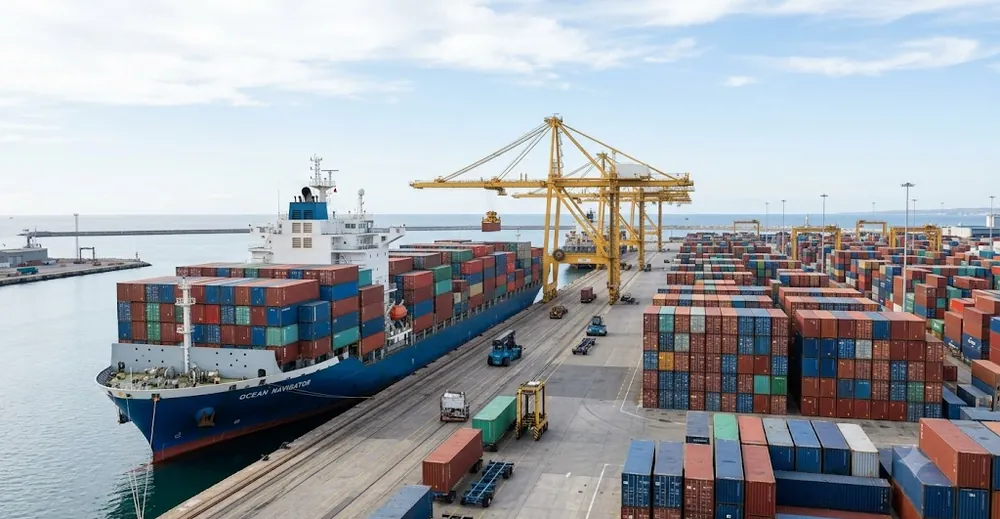
This guide walks through the terms that actually matter for heavy, palletized and containerized goods. We skip the rules built for air freight or bulk commodities and focus on what a buyer of nails, anchors, wire mesh, fasteners or scaffolding fittings needs to know.
What are Incoterms 2020 and why do they matter?
Incoterms 2020 are a set of eleven three-letter trade terms maintained by the ICC. They spell out who arranges transport, who pays freight, who clears customs, and, most importantly, the precise moment risk of loss or damage passes from us to you. They are not law, but when your contract references them, both sides know the rules.
For construction buyers, the stakes are physical. A pallet of hot-dip galvanized brackets weighs far more than a box of electronics, so freight, insurance and handling costs are a real slice of the landed price. Choosing the wrong term can mean you unexpectedly owe origin charges, ocean freight, or destination handling you never budgeted for.
One clarification matters up front. Incoterms decide cost and risk allocation. They do not transfer ownership, and they do not set payment terms. Title and payment sit in your sales contract, separate from the shipping term. We see buyers confuse these constantly, so treat them as two different conversations.
Which Incoterms 2020 rules suit heavy construction goods?
Of the eleven rules, four cover the vast majority of construction hardware shipments: EXW, FOB, CIF and CIP. Two others, FCA and DAP, come up often enough to know. The remaining rules mostly serve niche or bulk-cargo situations that rarely fit our containerized product lines.
Here is a quick reference table for the terms our customers use most.
| Term | Seller pays until | Buyer takes over | Best for |
|---|---|---|---|
| EXW (Ex Works) | Goods ready at our factory gate | Loading, export clearance, all freight | Buyers with a strong freight forwarder in China |
| FCA (Free Carrier) | Delivery to named carrier, export cleared | Main freight onward | Container and multimodal shipments |
| FOB (Free On Board) | Goods loaded on vessel at origin port | Ocean freight, insurance, destination | Full container loads by sea |
| CIF (Cost, Insurance, Freight) | Destination port, includes minimum insurance | Import clearance, duties, inland haul | Buyers wanting a delivered-port price |
| CIP (Carriage and Insurance Paid To) | Named destination, higher insurance cover | Import clearance, duties, final delivery | Multimodal or door-to-terminal moves |
| DAP (Delivered at Place) | Named destination, ready for unloading | Unloading, import duties and taxes | Buyers wanting near-door delivery |
Keep this table beside your quote requests. It tells you at a glance who carries the freight and where your responsibility begins.
EXW: maximum control, maximum responsibility
Under EXW, our job ends when the goods sit packed and ready at our Dingzhou facility. You, the buyer, arrange collection, handle export clearance, book the vessel, and cover every cost from our gate onward. It gives you total control of the logistics chain and the clearest view of every fee.
The catch is real. Export clearance in China is legally the exporter's realm, so an EXW buyer usually needs a capable forwarder who can act on their behalf. Newer importers often underestimate this. If you lack a trusted agent at origin, EXW quietly shifts a heavy administrative burden onto your side.
FCA: the modern container term
FCA closes a well-known gap in FOB. Under FCA, we deliver the goods, cleared for export, to a carrier or place you nominate, such as a container yard or forwarder's warehouse. Risk passes there, not at the ship's rail. For containers packed at our factory and trucked to port, FCA reflects reality far better than FOB.
The ICC actively recommends FCA over FOB for containerized cargo. We agree in principle, yet many buyers still ask for FOB out of habit and banking familiarity. Both work; FCA simply matches how containers actually move.
Where do cost and risk transfer under FOB and CIF?
FOB and CIF remain the two most requested terms in our order book, so the transfer points deserve a close look. Under FOB, we deliver, clear for export, and load the goods onto the vessel you nominate at the origin port. From the moment the cargo is on board, ocean freight, insurance and everything downstream is yours.
CIF looks similar but stretches our obligations across the sea leg. We pay ocean freight to your named destination port and buy a minimum level of marine insurance. Yet, and this trips people up, risk still passes at the origin port once goods are loaded, exactly as with FOB. So under CIF you hold the risk during the voyage even though we bought the insurance and paid the freight.
That split between risk transfer and cost transfer is the single most misunderstood point in ocean Incoterms. If a container is lost mid-ocean under CIF, you file the insurance claim, because the risk was already yours. Read your insurance certificate and confirm the coverage level before you rely on it.
FOB pros and cons for buyers
FOB gives you control of the ocean leg. You pick the carrier, negotiate freight rates, and often secure better shipping deals than a one-off seller arrangement. For buyers moving regular full container loads, that leverage adds up over a year of orders.
The trade-off is coordination. You must have a forwarder ready at both ends, book space in tight seasons, and manage insurance yourself. If your team lacks that bandwidth, the control FOB offers can turn into a scheduling headache.
CIF pros and cons for buyers
CIF hands us the freight booking and insurance arrangement, which simplifies life for buyers who prefer one delivered-port number. It suits smaller or less frequent importers who do not want to manage carriers overseas. The quoted price reaches your destination port with less legwork on your side.
The downside is visibility. You inherit whatever freight rate and minimum insurance we secured, and CIF insurance is deliberately basic cover. Many buyers upgrade the policy privately. For high-value hardware, that thin default coverage is worth scrutinizing before you sign.
When should you choose CIP over CIF?
CIP suits any shipment that is not purely port to port, and it carries a stronger insurance requirement than CIF. Under CIP we pay carriage to a named place, which can be an inland terminal or a container depot, and we take on more of the journey. Crucially, CIP under Incoterms 2020 requires all-risks insurance cover, a meaningful upgrade from the minimal cover baked into CIF.
Choose CIP when your goods move by more than one transport mode, for example rail plus road behind the destination port. Choose CIF when the deal is genuinely vessel to vessel and you simply want the price landed at a sea port. Because CIP travels well across multimodal chains, it pairs naturally with modern container logistics, while CIF stays anchored to sea freight.
Buyers sometimes ask us to quote both. That comparison is worth doing. The CIP number may look higher, but it often includes better insurance and delivery further inland, so compare the scope, not just the figure.
How do you pick the right Incoterm as a buyer?
Start with one honest question: how much of the logistics chain do you want to run? If you have a strong forwarder in China and want the cheapest possible landed cost with full control, EXW or FCA rewards you. If you would rather we handle the sea leg and hand you a delivered-port price, CIF or CIP fits better.
Weigh three factors in order. First, your logistics capability at origin, since export clearance and booking sit in China. Second, your appetite for managing insurance, because CIF's default cover is thin. Third, your cash flow and how early you want costs to land on your invoice.
For most of our construction hardware customers importing full containers, we recommend FOB or FCA once they have a reliable forwarder, and CIF or CIP for buyers who prefer a simpler, delivered price. When you request a quote, tell us your destination port and your logistics setup, and we will suggest the term that keeps your landed cost predictable. You can browse our construction hardware range first to firm up the specification.
Whatever you choose, name the exact place. "FOB Xingang" or "CIP Rotterdam" removes ambiguity. A term without a named location invites disputes over exactly where risk shifted, and disputes cost time you do not have on a live project.
Frequently asked questions
What is the main difference between FOB and CIF?
Under FOB, we load the goods on the vessel and you pay ocean freight, insurance and everything after. Under CIF, we pay the ocean freight and buy minimum insurance to your destination port. The key trap is that risk still transfers at the origin port under both terms, so during the CIF voyage the cargo is at your risk.
Which Incoterm gives buyers the lowest total cost?
EXW or FCA usually produce the lowest landed cost, because you control freight and insurance and cut out any seller markup on those services. The saving only holds if you have a capable forwarder in China. Without one, hidden origin fees and clearance headaches can erase the difference, so weigh your logistics capacity honestly.
Do Incoterms 2020 decide who owns the goods?
No. Incoterms 2020 allocate cost and risk only. Transfer of ownership, title and payment terms live in your separate sales contract. It is entirely possible to hold the risk of loss on goods you do not yet legally own. Keep the shipping term and the payment or title clauses as two distinct discussions.
Why does the ICC recommend FCA over FOB for containers?
FOB was designed for goods loaded across a ship's rail, which does not match how modern containers move. With containers packed at our factory and trucked to port, FCA passes risk when we hand the cargo to your nominated carrier, reflecting reality. FCA also handles multimodal routes that FOB never anticipated.
Is the insurance under CIF enough for construction hardware?
Often not. CIF requires only minimum cover, which is basic protection. For heavier or higher-value hardware shipments, many buyers arrange additional insurance privately or choose CIP, which mandates all-risks cover. Always read the insurance certificate, confirm the coverage level, and decide whether the default protects your consignment before you rely on it.
Picking the right Incoterm turns a confusing invoice into a predictable landed cost. If you are sizing a construction hardware order and want a clear, term-by-term breakdown for your destination, contact us and we will quote it your way.
