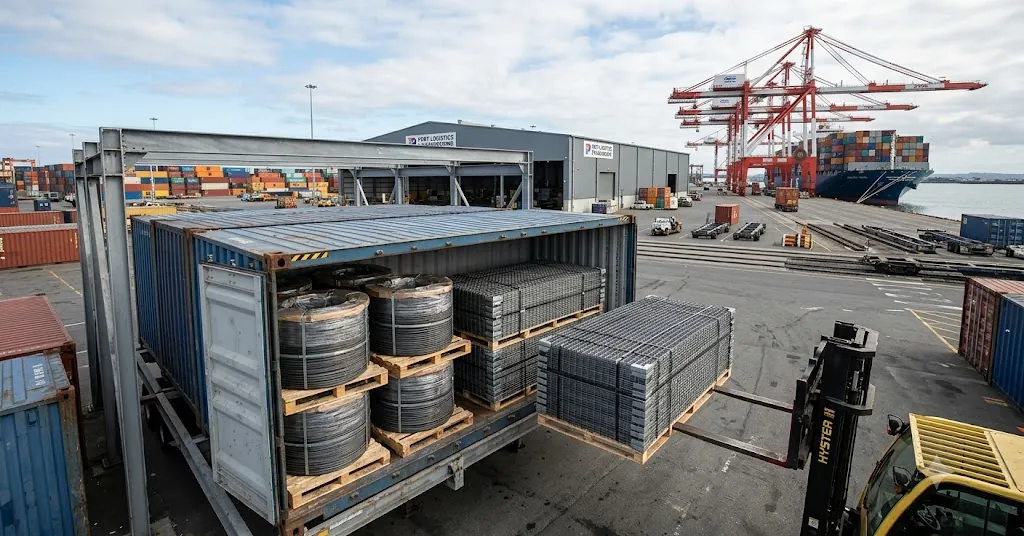
At Leeter, we have loaded these products out of Dingzhou, Hebei for North American and European buyers since 2006. This guide shares what actually happens on the packing floor and at the port, so you can order with fewer surprises.
Why fencing hardware is different from most freight
Most imported goods "cube out" before they "weight out." Fencing hardware does the opposite. A 40ft high-cube container has roughly 76 cubic meters of usable space but a practical cargo weight limit near 26 to 28 tonnes, depending on your destination road rules. Steel fencing products hit that weight ceiling long before they fill the box.
That single fact shapes every decision. You are not buying space, you are buying weight allowance. If you load a container full to the roof with light plastic mesh, you waste your weight budget. If you load solid steel T-posts, you may legally cap out with the container only half full by volume. Smart importing fencing hardware means blending heavy and light items to use both limits at once.
This is also why the honest answer to "how many posts fit in a container?" is always "it depends on the post." A 6ft, 1.25 lb/ft studded T-post weighs very differently from an 8ft heavy-gauge post, and the count per container swings accordingly.
How is each fencing product packaged?
Packaging depends entirely on the shape and weight class of the item. Fencing hardware falls into three broad families: rigid stakes and posts, rolled or panel mesh, and coiled wire products. Each family bundles differently, and each has a failure mode you want to avoid.
T-posts and studded stakes
T-posts ship as steel bundles, usually banded in units of 5, 10 or 20 pieces with the anchor plates alternated so the bundle sits flat and square. We nest the studded faces against each other to reduce bundle height and stop the posts sliding. Bundles are cross-strapped with high-tensile steel banding, and we add edge protectors under the bands so the strapping does not cut into the paint or galvanizing during transit.
The common mistake here is over-long bundles that flex in the middle. A bundle that sags will scuff its own coating and can jam a forklift. We keep bundle length matched to piece length and add a center band on anything over 7ft.
Welded and galvanized mesh
Welded wire mesh ships either in rolls or as flat rigid panels, and the two behave nothing alike in a container. Rolls are compressed, tied at three or four points, and often wrapped in woven PP fabric to keep the edges from snagging other cargo. Rigid welded panels stack flat on bearers, banded into blocks, with plywood or cardboard between the top layer and any banding.
Panels are where sharp wire ends live. We fold or clip protruding ends and cap the corners, because a single loose panel corner can shred the packaging on everything stacked above it. Galvanized mesh also needs to stay dry; white rust from trapped condensation is the most common claim we see, so ventilated wrapping beats fully sealed plastic.
Tie wire, staples and small hardware
Tie wire ships in coils or spools inside cartons, and fence staples and clips ship in cartons on pallets. These small, dense items are the secret weapon of container loading. A carton of tie wire is heavy and compact, so it slots into the gaps around posts and mesh to firm up the load and add paying weight without adding volume.
How do you load a fencing container for weight?
Load heavy, dense items low and centered, then build lighter items on top and toward the doors. Because fencing hardware weights out, floor loading and axle balance matter more than cube efficiency. An unevenly loaded 26-tonne container can exceed road axle limits even when the total weight is legal, and that triggers fines or repacking at the port.
Weight distribution follows a simple order in our loading:
- T-post bundles first, laid lengthwise down the floor, centered so the mass sits over the container's midline.
- Rigid mesh panels stacked flat over or beside the posts, keeping the heaviest blocks toward the center axle.
- Wire coils and staple cartons wedged into voids to lock everything and stop shifting.
- Light rolled mesh last, on top and near the doors where a slight forward shift does no harm.
We block and brace voids with dunnage so nothing migrates. A container that rattles loose in an ocean swell arrives with bent posts and burst bands. The goal is a solid, immovable block of steel that behaves as one mass.
Weight versus volume: the real trade-off
Here is the tension every fencing importer manages. Fill for weight and you leave air; fill for volume and you break the weight limit. The answer is deliberate mixing. Pair the densest items (solid posts, wire coils) with the bulkiest light items (rolled plastic or light-gauge mesh) so you approach both ceilings together.
The table below shows how different fencing products behave in a standard 40ft high-cube container. Treat these as planning ranges, not guarantees; exact figures depend on gauge, length, coating and your road weight rules.
| Product | Packaging | Limiting factor | Typical loading behavior |
|---|---|---|---|
| T-posts / studded stakes | Steel-banded bundles | Weight | Weights out fast; load low and centered |
| Rigid welded panels | Flat banded blocks on bearers | Weight, then volume | Dense; good floor and mid-layer filler |
| Rolled welded / galvanized mesh | Compressed tied rolls | Volume | Cubes out; use to fill upper space |
| Light plastic / poultry mesh | Compressed rolls | Volume | Very light; fills leftover cube |
| Tie wire / staples | Cartons on pallets | Weight | Dense void-filler; adds paying weight |
How do you consolidate mixed fencing items?
Consolidate by pairing heavy items that weight out with light items that cube out, so a single container hits both limits together. Because a full container of only T-posts wastes cube, and a full container of only plastic mesh wastes weight allowance, the profitable load is almost always a deliberate mix. This is the single biggest lever on your landed cost per unit.
A practical consolidation looks like a base of posts and rigid panels for weight, tie wire and staples filling the voids, and rolled or light mesh riding on top to use the remaining cube. Done well, you approach the weight limit and the volume limit within the same few loading rows.
Consolidation also helps buyers who want a full product range but do not need a full container of each item. Mixing SKUs in one box reduces the number of shipments, spreads freight cost across more units, and simplifies customs entry because it all lands under one bill of lading. The trade-off is more complex packing lists and careful labeling so your warehouse can separate items on arrival. We mark every bundle and pallet with item codes and piece counts to keep receiving clean.
One caution from experience: do not consolidate coated and uncoated steel loosely together in humid seasons. Bare steel can transfer surface rust to galvanized surfaces where they touch. Keep coating types separated by dunnage or wrapping.
What paperwork and specs prevent surprises?
Confirm gauge, length, coating weight and piece count in writing before production, because these drive both freight weight and customs classification. A mismatch between the declared spec and the actual load is the most common cause of delays we see, and it is entirely avoidable. Fencing hardware crosses several tariff lines: posts, welded mesh and wire each classify differently.
Nail down these points on your order:
- Steel gauge and post weight per foot, since this sets container piece counts and total tonnage.
- Coating type and grams per square meter for galvanized items, which affects both price and corrosion warranty.
- Bundle and roll counts, so the packing list matches what the warehouse actually receives.
- Destination road weight limits, because your legal max container weight varies by country and even by state.
When you request a quote, send your target quantities and destination port. We can model the load, tell you whether you weight out or cube out first, and suggest a consolidation mix that lowers your cost per post or per roll. That planning conversation up front saves far more than it costs.
A note on realistic expectations
We will not quote you a magic piece count without knowing your spec, and you should be wary of any supplier who does. The honest range for T-posts in a 40ft high-cube spans widely because post weight varies so much. Give us the gauge and length, and the number becomes concrete. Vague inputs produce vague loads and disappointing containers.
Frequently asked questions
How much does a container of fencing hardware weigh?
A standard 40ft high-cube container of fencing hardware is limited by weight, not space, typically capping near 26 to 28 tonnes of cargo depending on your destination road rules. Solid steel T-posts and wire coils reach that ceiling well before the box is full, so plan around the weight allowance first.
Can I mix T-posts, mesh and tie wire in one container?
Yes, and mixing is usually the smartest choice. Pair dense items that weight out, like posts and wire, with bulky light items that cube out, like rolled mesh, so one container approaches both the weight and volume limits together. We label every bundle so your warehouse can separate SKUs on arrival.
How do you stop galvanized mesh from rusting in transit?
White rust from trapped condensation is the main risk. We use ventilated woven wrapping rather than sealed plastic, keep coated and bare steel separated by dunnage, and avoid loose contact between coating types. Keeping the load dry and letting it breathe matters more than heavy shrink wrap, especially on long humid ocean routes.
Do I need pallets for fencing hardware?
Not always. T-post bundles and mesh rolls are steel-banded and often loaded loose-braced for maximum weight efficiency. Small hardware like staples and tie wire ships palletized in cartons for easier handling. Pallets add handling speed at your warehouse but consume some cube, so we balance them against your weight-versus-volume goals.
How do I get an accurate container quote?
Send your product specs, gauge, length, coating weight and target quantities, plus your destination port. With those, we model whether the load weights out or cubes out, propose a consolidation mix, and give a concrete piece count. Vague inputs produce vague loads, so the more spec detail you share, the tighter the quote.
Importing fencing hardware rewards planning over guesswork. Get your bundling, weight distribution and consolidation right, and each container carries more paying product with fewer claims. If you are ready to plan a load, request a quote with your specs and destination, and we will help you build a container that arrives dense, safe and cost-efficient.
