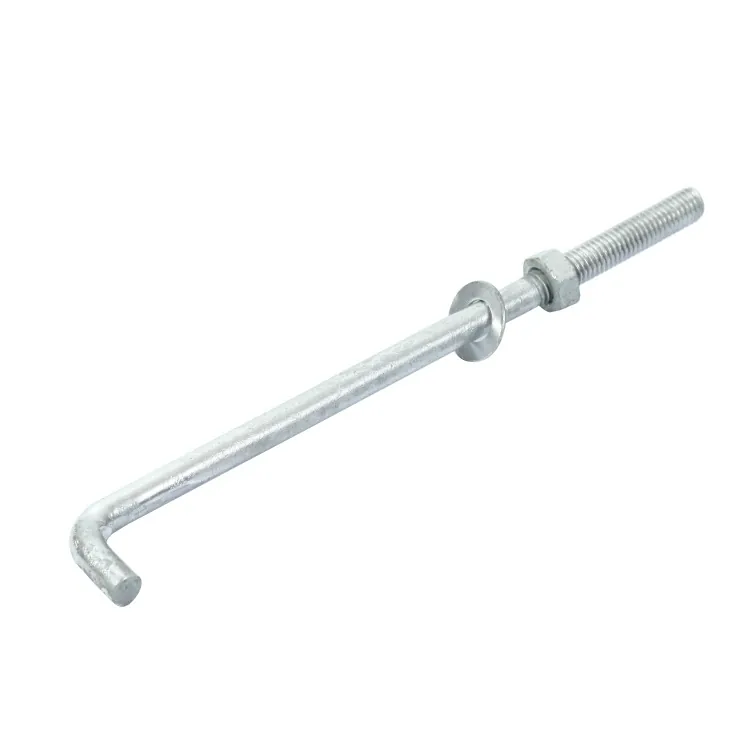
At Leeter, we have been manufacturing wire, mesh and anchor products in Dingzhou, Hebei since 2006, and we ship anchor bolts to buyers across North America and Europe. Over those years we have seen the same drawing questions come up again and again. This guide walks through each element of a typical anchor bolt drawing so your engineering intent survives the trip from paper to production.
Why the drawing matters more than the part number
An anchor bolt is deceptively simple: a rod, a bend or a plate, and some thread. But that simplicity hides a lot of choices. A drawing removes the guesswork. Without one, a supplier has to assume dimensions, and assumptions are where mistakes and delays begin.
When we receive a clear drawing, we can quote faster, cut steel to the right length, and match the exact thread and finish your project specifies. When a drawing is missing or vague, we come back with questions, and every question adds days. So before we get into individual callouts, the honest advice is this: send a drawing whenever you can, even a rough hand sketch with dimensions beats a plain part description.
What are the main parts of an anchor bolt drawing?
Most drawings, whether for an L-bolt, a J-bolt, a U-bolt or a straight headed anchor, share the same family of callouts. Learn these once and you can read almost any anchor bolt detail you are handed.
Bolt type and bend shape
The first thing to identify is the shape. An L-bolt has a 90-degree bend at the embedded end. A J-bolt has a hooked, roughly 180-degree curve. A U-bolt is a single rod bent into a U with two threaded legs. A straight anchor uses a plate, a nut, or a forged head for grip instead of a bend.
The drawing usually shows this shape as a side profile. Look for the bend radius and the bend angle. On an L-bolt, the length of the short leg (often called the hook length or J-dimension) is a separate dimension from the overall length, and it matters because it controls pull-out resistance in the concrete. If you are still choosing between shapes, our guide on L vs J vs U anchor bolts breaks down the trade-offs.
Diameter and total length
Two numbers drive most of the cost and the raw material: the rod diameter and the overall length. Diameter is called out by nominal size, for example 3/4 inch or M20. Total length is measured end to end along the bolt, including the bent portion where one exists.
Read these carefully. A drawing may show the developed length (the straight length of rod before bending) or the finished overall height after the bend, and confusing the two changes how much steel we cut. When in doubt, note both on the order and we will confirm.
Thread length and thread type
Thread length is how much of the rod is threaded, measured from the projecting end. It is a distinct dimension from total length, and it is easy to overlook. Too little thread and the nut cannot reach; too much thread and you have wasted rolling and a weaker net section.
The drawing should also state the thread type: UNC for imperial coarse thread, or a metric pitch such as M20 x 2.5. Note whether the drawing calls for cut (machined) or rolled thread, since rolled thread is stronger and is our default for most structural work.
Projection and embedment
Projection is the length of bolt that sticks up above the concrete or the base plate. Embedment is how deep the bolt sits in the concrete. Together they must add up correctly against the total length, and the drawing usually shows a dashed line marking the concrete surface.
This is one of the most important callouts for the field crew. If projection is short, the nut and washer will not seat on the base plate. If it is long, the threads may foul equipment. We manufacture to the projection you specify, so double-check it against your base plate thickness plus the nut, washer and a little tolerance.
Grade, standard and finish
The material grade tells us the steel strength and the specification it must meet. Common callouts include ASTM F1554 Grade 36, 55 or 105, ASTM A307, or a metric class such as 8.8. The drawing often names the governing standard in the title block or a note.
Finish is called out as plain (black), hot-dip galvanized to ASTM A153, mechanically galvanized, or zinc plated. Galvanizing adds a coating thickness that can affect thread fit, so we tap the nuts oversize to match. If the drawing does not state a finish, we ask, because the wrong coating is a costly redo.
Hardware: nuts, washers and templates
Many drawings specify the hardware that ships with each bolt: one or two hex nuts, a heavy plate washer, sometimes a leveling nut, and a template or setting plate to hold the bolt group in position during the pour. These items usually appear in a note or a small bill of materials beside the drawing.
Do not skip this section. A bolt without the matching nut grade is not ready to install. For a full breakdown of matching components, see our overview of anchor bolt nuts and washers sets.
How do you read the callouts on an anchor bolt detail?
Here is a compact reference that maps each common callout to what it means for us on the factory floor. Keep this table handy the next time a drawing lands on your desk.
| Drawing callout | What it means | Why it matters for manufacturing |
|---|---|---|
| Type / bend shape | L, J, U or straight headed | Determines tooling, bending dies and grip method |
| Nominal diameter | Rod size, e.g. 3/4 in or M20 | Sets raw bar stock and thread dies |
| Overall length | End-to-end finished length | Controls cut length of steel |
| Hook / short-leg length | Length of the bent leg | Affects pull-out strength and die setup |
| Thread length | Threaded portion from top | Sets thread rolling length |
| Thread type / pitch | UNC or metric pitch | Must match the supplied nut |
| Projection | Length above concrete | Confirms nut and washer seat on base plate |
| Embedment | Depth in concrete | Verifies total length is correct |
| Grade / standard | e.g. F1554 Gr. 36, A307 | Selects steel and required testing |
| Finish | Plain, HDG, plated | Coating and oversize tapping of nuts |
| Hardware note | Nuts, washers, template | Completes the shipped assembly |
What does a sample bolt schedule look like?
A bolt schedule is a table that lists every anchor bolt on a project by mark, so one drawing can cover dozens of variants without a separate sketch for each. Reading the schedule is a skill worth building, because most commercial and industrial jobs order from a schedule, not from a single detail.
Below is a simplified example. Each row is a bolt mark you would quote and manufacture as a distinct part.
| Mark | Type | Dia. | Overall length | Thread length | Projection | Grade | Finish | Qty |
|---|---|---|---|---|---|---|---|---|
| AB-1 | L-bolt | 3/4 in | 18 in | 3 in | 3 in | F1554 Gr. 36 | HDG | 48 |
| AB-2 | Straight | 1 in | 24 in | 4 in | 4 in | F1554 Gr. 55 | Plain | 16 |
| AB-3 | J-bolt | 5/8 in | 12 in | 2.5 in | 2 in | A307 | Zinc plated | 32 |
Read a schedule row like a sentence: mark AB-1 is a 3/4 inch L-bolt, 18 inches overall, with 3 inches of thread, projecting 3 inches, in F1554 Grade 36, hot-dip galvanized, and you need 48 of them. Every column answers one of the callouts we covered above. If a column is blank, that is your cue to confirm the value before the order goes to production.
Common mistakes when reading an anchor bolt drawing
The most frequent errors we see are simple ones. Mixing up total length with developed length leads to bolts cut too long or too short. Ignoring the finish note produces plain bolts where galvanized was required. Forgetting the hardware line means the nuts and washers arrive on a separate lead time, holding up the whole install.
Another recurring issue is unit confusion, imperial versus metric, especially on drawings that cross borders. We serve buyers in both systems, so we always confirm units when a drawing mixes them. A quick check at the quoting stage saves a scrapped batch later.
Get help reading your drawing
You do not have to decode a complicated anchor bolt drawing alone. Send us the detail or the full schedule and our team will confirm every callout, flag anything ambiguous, and return a clear quote with the exact dimensions, grade, finish and hardware called out. If you are still developing the drawing, we can suggest standard configurations that keep cost and lead time down.
Ready to move forward? Request a quote with your drawing attached, and we will turn your engineering intent into parts that fit the first time.
Frequently asked questions
What is the difference between total length and thread length on a drawing?
Total length is the full end-to-end measurement of the bolt, including any bent leg. Thread length is only the threaded portion, measured from the projecting end. They are separate callouts, and a bolt has one total length but a shorter thread length. Confusing the two is the most common ordering error.
What does projection mean on an anchor bolt detail?
Projection is the length of the bolt that stands above the concrete or base plate after the pour. It must be long enough to seat the washer and nut with a little tolerance, but not so long that it interferes with equipment. Always check projection against your base plate thickness plus nut and washer height.
Which grade should I specify if the drawing does not say?
If the grade is missing, do not guess. Ask your engineer or ask us. Common structural choices are ASTM F1554 Grade 36 for general use, Grade 55 for higher strength, and A307 for light-duty work. The grade drives the steel we buy and the testing required, so it must be confirmed before production.
Do I need to order nuts and washers separately?
Not usually. Most anchor bolt drawings specify the hardware in a note, and we ship the matching nuts, washers and any template together as a set. If the drawing does not mention hardware, tell us what you need. A bolt without the correct nut grade is not ready to install.
Can you manufacture from a hand sketch instead of a full drawing?
Yes. A clear hand sketch with the diameter, total length, thread length, bend shape, grade and finish is enough for us to quote and produce. A formal drawing is ideal, but honest dimensions on paper beat a vague description every time. Send what you have and we will confirm the details with you.
