We are Hebei Leeter Import and Export Co., Ltd, a wire, mesh and stake manufacturer based in Dingzhou, Hebei since 2006. We supply contractors and distributors across North America and Europe, so we see the same forming hardware ship out week after week. Below is what belongs on your list, what each item does, and roughly how much to keep on hand.
The quick-reference checklist
Here is the short version before we go item by item. Print it, tape it to the shop wall, or hand it to whoever runs your material orders.
| Accessory | What it does | Typical order (per crew) |
|---|---|---|
| Form stakes | Anchor and align form boards | 100-500 pieces per size |
| Plywood clips (H-clips) | Join panel edges, hold spacing | 250-1,000 pieces |
| Tie wire (annealed) | Tie rebar and secure forms | 5-20 rolls |
| Duplex (double-head) nails | Temporary fastening, easy pull | 25-50 lb |
| Common & sinker nails | Permanent form fastening | 25-50 lb |
| Snap ties / form ties | Hold wall forms at set width | 500+ pieces per wall job |
| Wedge bolts / wing nuts | Lock ties and walers | Match tie count |
| Bracing lumber & turnbuckles | Hold forms plumb | 10-30 units |
| Form oil / release agent | Clean stripping, longer form life | 5-10 gal |
| Chamfer strip | Clean, chip-resistant edges | Match linear footage |
The rest of this guide explains each line so you can adjust quantities to your own work mix.
What form stakes belong on the list?
Form stakes are the backbone of flatwork forming. They drive into the ground behind form boards and hold the line straight against the weight of the pour. Without enough stakes at the right spacing, boards bow out and you end up with a wavy curb or a slab edge that never looks right.
Most crews carry a few lengths. Shorter stakes, around 12 to 18 inches, suit thin slabs and sidewalks. Longer stakes, 24 to 36 inches, hold footings and thicker pours or work in loose, sandy soil that needs more bite. Round nail-hole stakes and flat stakes both have a following; round versions shed concrete easily and pull clean, while flat versions resist twisting.
Stock stakes by the bundle, not the handful. A driveway or foundation job can eat 100 to 300 stakes fast at 2 to 4 foot spacing. Keep a mix of lengths so nobody is cutting long stakes down to fit a shallow form. Our form stakes ship in several diameters and lengths with pre-punched nail holes, which speeds up nailing off in the field.
A quick tip from the field: stakes bend and get chewed up over time, so treat them as semi-consumable. Buy a reserve so a bent batch never stops a pour.
Which plywood clips and form ties do you need?
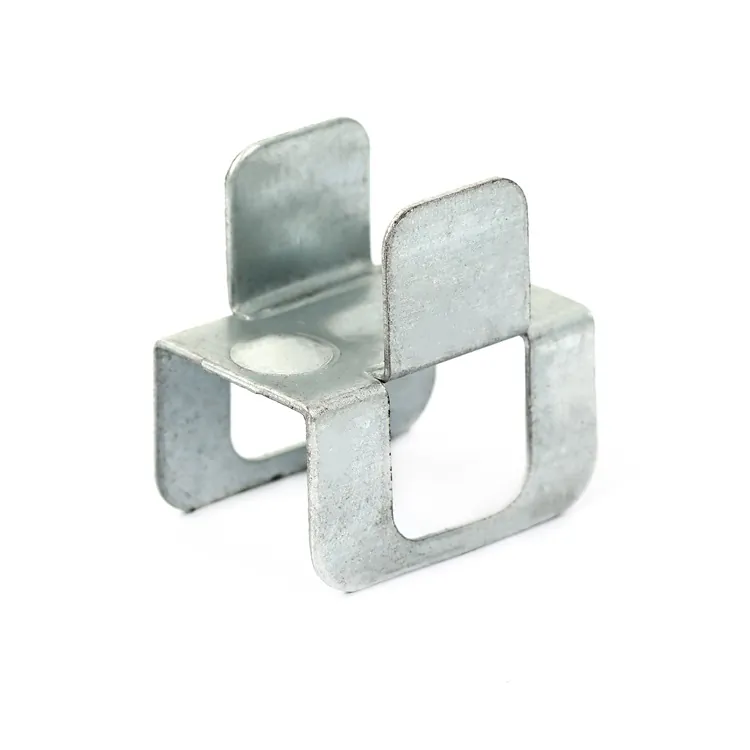
Plywood clips, often called H-clips, join the edges of plywood or panel forms so they share load and hold consistent spacing. Slide the clip between two panel edges and it keeps them flush, cutting down on gaps that leak paste and leave fins on your finished wall or slab.
They matter most on panel-heavy jobs, decks, large slabs and wall forms built from sheet goods. Spacing runs along the unsupported edges between framing, so a single job can call for several hundred clips. Keep a box or two on the truck; they are cheap, easy to lose and annoying to run short on. Our plywood clips come sized to common panel thicknesses, so match the clip to your sheet gauge.
Wall forming brings in a second family of accessories: form ties. Snap ties, she-bolts and taper ties run through opposing wall panels and hold them at the exact wall thickness while concrete tries to push them apart. Ties pair with wedge bolts, wing nuts or waler brackets that lock against the outside of the form. Order ties by wall length and height, then match the fastener count one for one. Running out of wedges mid-wall is as bad as running out of ties.
How much tie wire, nails and fasteners should you stock?
Tie wire and nails are the consumables that disappear fastest, so overbuy rather than underbuy. Annealed tie wire, usually 16 or 16.5 gauge, ties rebar intersections and lashes forms together in a pinch. A busy crew can burn through several rolls a week on a rebar-heavy footing or wall.
Nails split into two jobs. Duplex nails, the double-head kind, fasten temporary formwork. The second head stands proud so you can yank the nail with a claw when you strip, which saves splitting your form lumber. Common and sinker nails handle framing that stays put. Keep both on hand in a couple of sizes, generally 8d for lighter work and 16d for heavier bracing and lumber.
Here is a rough stocking guide for the consumables:
| Consumable | Common spec | Reorder point |
|---|---|---|
| Tie wire | 16 ga annealed, 3.5 lb rolls | Below 5 rolls |
| Duplex nails | 8d and 16d | Below half a box |
| Common nails | 8d and 16d | Below half a box |
| Concrete stake nails | Fit stake holes | Below 5 lb |
Buy nails in bulk boxes rather than small packs; the price per pound drops and you stop making midday runs. Tie wire is light and stores forever, so a shelf of spare rolls costs little and saves plenty. Do not forget the tools that go with them: nippers, a wire twister or a battery tie gun for bigger rebar jobs.
What bracing and finishing accessories complete the kit?
Bracing hardware keeps forms plumb and straight once the concrete load hits. Diagonal kickers, turnbuckles and adjustable braces tie the top of a wall form back to stakes or the ground so nothing leans out during the pour. Skimp here and a wall can rack out of plumb before it sets, which is expensive to fix and impossible to hide.
Round out the kit with the finish-and-release items. Form oil or release agent coats the inside face of forms so they strip clean and last more reuses; plan on five to ten gallons for a run of wall or panel forms. Chamfer strip, the triangular fillet nailed into inside corners, gives you a clean beveled edge instead of a fragile square one that chips. Add spacers or chairs to hold rebar off the ground at the right cover, plus expansion joint material and edge form flexible board for curves.
Do not overlook the odds and ends: string line and chalk for layout, a spirit or laser level, spare hammers, a sledge for driving stakes, and gloves. None of these are glamorous, but a missing sledge stops stake work cold. A well-stocked forming kit is really two lists in one, the structural hardware that holds the pour and the small tools that let the crew use it.
How do you build a reusable ordering routine?
The best checklist is one you actually rerun before every job. Walk the list against the specific pour: linear feet of edge form, square footage of panel, wall height and length, and soil type for stake selection. Those four numbers drive most of your quantities.
Standardize on a few stake lengths and one or two clip sizes so you are not managing a dozen part numbers. Set reorder points, the shelf-quantity trigger where you place a new order, so consumables never hit zero. And buy your repeat items, stakes, clips, ties and wire, from a maker who can hold spec batch to batch, because mismatched hardware is where quality slips.
If you order forming accessories in volume and want consistent gauge, length and finish across shipments, request a quote from us and we will spec a package to your job mix.
Frequently asked questions
How many form stakes do I need per job?
It depends on form length and stake spacing, usually 2 to 4 feet apart. A typical residential driveway or foundation can use 100 to 300 stakes. Loose or sandy soil needs closer spacing and longer stakes, so add a reserve so a few bent stakes never stall the pour.
What is the difference between duplex nails and common nails?
Duplex nails have two heads. The upper head stands above the surface so you can pull the nail easily when stripping temporary formwork, without splitting the lumber. Common and sinker nails have a single head and drive flush for permanent framing that stays in place after the concrete cures.
What size tie wire is best for concrete forming?
Most crews use 16 or 16.5 gauge annealed tie wire for tying rebar and securing forms. It bends and twists easily by hand or with a tie gun yet holds firm. Heavier work sometimes uses a lower gauge for extra strength. Keep several rolls on hand since it is cheap and stores indefinitely.
Do I need plywood clips for slab work?
You need plywood clips whenever you form with plywood or panel sheets and the panel edges fall between framing supports. The clips align adjoining edges and hold spacing, reducing leaks and fins. For solid-lumber forms without sheet goods, clips are not required, so match the accessory to your forming method.
Can I reuse concrete forming accessories?
Many accessories are reusable. Form stakes, plywood clips, snap-tie wedges, braces and turnbuckles last many pours with care and cleaning. Tie wire and nails are consumables, used once and gone. Coat forms with release agent and clean hardware after each job to stretch reuse and protect your investment.
Ready to stock your forming kit?
Run this checklist before your next pour and you will spend less time chasing hardware and more time finishing concrete. Whether you need form stakes, plywood clips, tie wire or a full forming package, Leeter manufactures forming accessories to consistent spec for contractors and distributors across North America and Europe. Request a quote and tell us your job mix, and we will help you build an order that lands complete and on time.
