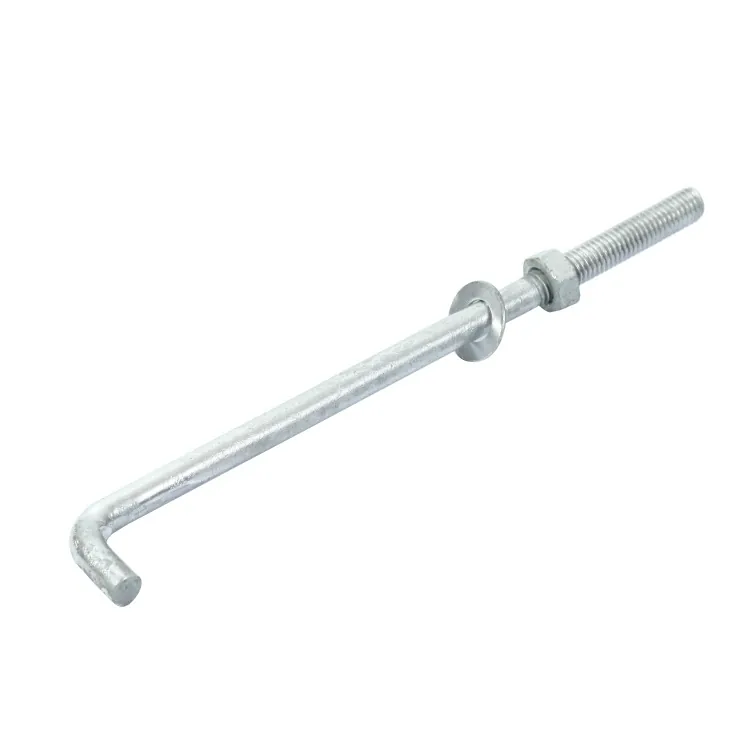
At Hebei Leeter Import and Export Co., Ltd ("Leeter"), founded in 2006 in Dingzhou, Hebei, we manufacture and export cast-in anchor bolts to buyers across North America and Europe. This guide explains how the two families differ, when each one makes sense, and how to match the anchor to the job.
What is the core difference between cast-in and post-installed anchors?
The core difference is timing. A cast-in anchor is placed in wet concrete and becomes part of the pour, while a post-installed anchor is fitted into a hole drilled in hardened concrete after the fact.
That single distinction drives almost everything else. Because a cast-in bolt is surrounded by concrete that flows around it and cures in contact with the steel, the bond and the bearing between the anchor and the concrete are continuous. The load path is clean, the embedment is exactly what the drawings call for, and the concrete around the anchor is undisturbed.
A post-installed anchor works differently. Someone drills into a slab or wall, cleans the hole, and then sets the anchor by mechanical expansion, by keying into an undercut, or by injecting a bonding adhesive. The concrete has already reached strength, so the anchor has to grip material that was never shaped around it. That approach is flexible and fast on site, but it depends heavily on drilling accuracy, hole cleaning, and installer skill.
Both types are governed by the same underlying design principles for concrete anchorage, and reputable products carry test data and approvals from recognized bodies. The choice is less about which is "better" and more about which fits the sequence and demands of your project.
Cast-in anchor types
Cast-in anchors cover a broad range of shapes. The most common are headed bolts, L-shaped and J-shaped bent bolts, threaded rods with a nut and plate, and anchor bolt assemblies with templates that hold a bolt pattern in position during the pour. Headed and plated anchors resist pull-out through bearing, while bent bolts rely on the hook and the surrounding concrete.
Post-installed anchor types
Post-installed anchors fall into two broad groups. Mechanical anchors, such as wedge, sleeve, and undercut types, transfer load through friction or interlock against the drilled hole. Adhesive or bonded anchors use an epoxy or polyester resin to glue a threaded rod or rebar into the hole, spreading load along the bonded length.
Which anchor delivers higher load capacity?
Cast-in anchors generally deliver higher and more reliable capacity in both tension and shear, because the concrete cures in full contact with the steel and the embedment is set before the pour rather than trimmed by field conditions. For heavily loaded connections, cast-in is usually the reference point that other methods are compared against.
The reason is structural, not marketing. A cast-in headed bolt develops tension through bearing at the head, deep inside sound concrete, and the failure surfaces it can mobilize are large. Post-installed anchors are strong and widely trusted, but their capacity is more sensitive to installation. A hole that is not fully cleaned, an adhesive cured in cold conditions, or an anchor set too close to an edge can all reduce the number the designer counted on.
This is why base plates for columns, tall equipment, and structures with significant uplift or moment are so often designed around cast-in bolts. When the connection has to carry serious load and the loss of it would be costly, the predictability of a pre-set anchor is worth the extra planning.
That said, high-quality post-installed anchors, correctly specified and installed, satisfy demanding structural requirements every day. The gap is narrowest for moderate loads and widest for large tension and seismic demands, where cast-in remains the conservative choice.
When should you plan for cast-in anchors?
Plan for cast-in anchors whenever the connection is known during design and the loads are significant, because setting bolts before the pour gives you the strongest, most consistent result and avoids drilling into finished concrete later. New construction with engineered base plates is the classic case.
If you are building from drawings, the anchor pattern is already defined. Column bases, machine foundations, crane rails, signposts, guardrail posts, and pre-engineered metal buildings all benefit from bolts held in a template and cast in place. The template keeps the bolt group square and at the correct projection, so the steel that arrives later drops onto the studs without rework.
Cast-in also wins where you cannot afford to disturb the concrete. Drilling near reinforcement risks cutting a bar, and drilling near an edge or in thin sections risks cracking. By placing the anchor before the pour, you sidestep those hazards entirely and keep full control over embedment depth, spacing, and edge distance.
The trade-off is coordination. Cast-in demands that the anchor layout be finalized and the bolts delivered before concrete day. A missed bolt or a template shifted during the pour is expensive to correct. In our experience supplying these bolts, the projects that go smoothly are the ones where the fabricator confirms the pattern, projection, and thread length well before the truck arrives.
Practical planning tips for cast-in
Confirm the bolt diameter, grade, embedment, and projection against the base plate drawing. Use a rigid template so the group cannot spread. Protect exposed threads with tape or a cap during the pour, and verify the layout after the concrete is placed but before it sets, while adjustment is still possible.
When are post-installed anchors the better choice?
Post-installed anchors are the better choice for retrofit, repair, and any connection that was not planned before the pour, because they let you fix steel to concrete that is already cured without breaking out and recasting. Flexibility on site is their defining strength.
Think about the situations that come up after a structure exists. You are adding a handrail to an existing deck, mounting equipment to a warehouse floor, tying a new steel frame into an old foundation, or correcting a bolt that was cast in the wrong spot. In all of these, there is no wet concrete to work with, so a drilled-in anchor is the only realistic route.
Post-installed anchors also shine when field conditions are uncertain. If the exact fixing location may move during construction, waiting until the concrete is up lets crews set anchors exactly where hardware finally lands. That adaptability reduces the risk of a misplaced cast-in group that no longer matches the delivered steel.
The responsibility shifts to the installer. Correct drill size, thorough hole cleaning, the right embedment, respect for edge and spacing limits, and, for adhesives, attention to temperature and cure time all determine whether the anchor reaches its rated strength. Follow the manufacturer's printed instructions, because those values come from the tests behind the product's approval.
Cast-in vs post-installed anchors: side-by-side comparison
The table below summarizes how the two families compare across the factors buyers ask us about most. Use it as a starting filter, then confirm the details against your project's design documents and the specific product data.
| Factor | Cast-in anchors | Post-installed anchors |
|---|---|---|
| Installation timing | Set in formwork before the pour | Drilled and fixed into cured concrete |
| Load capacity | Highest and most predictable | Strong; depends on correct installation |
| Best for | New construction, heavy loads, base plates | Retrofit, repair, unplanned connections |
| Concrete disturbance | None; concrete cures around anchor | Drilling required; risk near rebar and edges |
| Planning demand | High; layout fixed before concrete day | Low; located on site as needed |
| Installer sensitivity | Lower once cast correctly | Higher; hole cleaning and cure are critical |
| Correcting mistakes | Costly after the pour | Easier to relocate a new anchor |
| Typical Leeter supply | Yes, our core product | Not our focus |
How do you match the anchor to the project?
Match the anchor to the project by working through three questions in order: is the connection known during design, how heavy are the loads, and can you disturb the concrete. The answers usually point clearly to one family, and only rarely leave a genuine toss-up.
Start with timing. If the connection is defined before the pour and the concrete has not yet been placed, cast-in is available and almost always preferred for structural work. If the concrete already exists, the decision is effectively made for you: post-installed is the path.
Then weigh the loads. For base plates carrying columns, equipment with uplift, or anything subject to seismic demand, lean toward cast-in for its predictable capacity. For lighter fixtures and secondary attachments, a well-chosen post-installed anchor is efficient and entirely adequate.
Finally, consider what the concrete will tolerate. Congested reinforcement, thin sections, and small edge distances all favor cast-in, because they make drilling risky. Where the member is thick and lightly reinforced, drilling is lower risk and post-installed options open up. When you are ready to specify cast-in bolts for a project, request a quote and our team will help you confirm sizes, grades, and finishes.
Frequently asked questions
Are cast-in anchors always stronger than post-installed anchors?
Cast-in anchors usually offer higher and more predictable capacity because the concrete cures in full contact with the steel and the embedment is set before the pour. High-quality post-installed anchors, correctly specified and installed, still meet demanding structural requirements. The gap is widest for large tension and seismic loads and narrows for moderate demands.
Can I use post-installed anchors in new construction?
Yes. Post-installed anchors are common in new construction when a fixing location is finalized after the pour, when late design changes occur, or when a cast-in bolt was misplaced. For primary base plates and heavy connections, though, most engineers still prefer cast-in bolts set before the concrete is placed, for their predictable strength.
What makes cast-in anchors fail or underperform?
Cast-in anchors most often underperform because of layout errors rather than material problems: a shifted template, wrong projection, insufficient embedment, or edge distances that are too small. Protecting threads during the pour and verifying the bolt group before the concrete sets prevents most issues. Sound concrete and correct detailing do the rest.
Do post-installed anchors need special installation care?
Yes, more than cast-in. Post-installed anchors depend on the correct drill diameter, thorough hole cleaning, proper embedment, and respect for edge and spacing limits. Adhesive anchors add temperature and cure-time requirements. Always follow the manufacturer's printed instructions, because the rated capacities come directly from the tests behind the product's approval.
Which anchors does Leeter supply?
Leeter manufactures and exports cast-in anchor bolts, including headed, L-shaped, J-shaped, and threaded-rod assemblies, to buyers in North America and Europe. We focus on the cast-in family rather than post-installed systems. If you need help choosing sizes, grades, or finishes for a pour, contact our team and we will support your selection.
Choosing between cast-in and post-installed anchors comes down to timing, load, and how much you can disturb the concrete. For new work with real structural demand, cast-in bolts give you the strongest and most reliable connection. To specify the right cast-in anchor for your next project, request a quote and we will help you get the details right before concrete day.
